Carbon Peel (Hollywood Facial): How It Works and Why Clinics Offer It
Learn how a carbon peel combines a topical carbon layer with Q-switched laser energy, what it can realistically address, and why clinics add the Hollywood facial to their treatment menus.
TL;DR — Quick answer
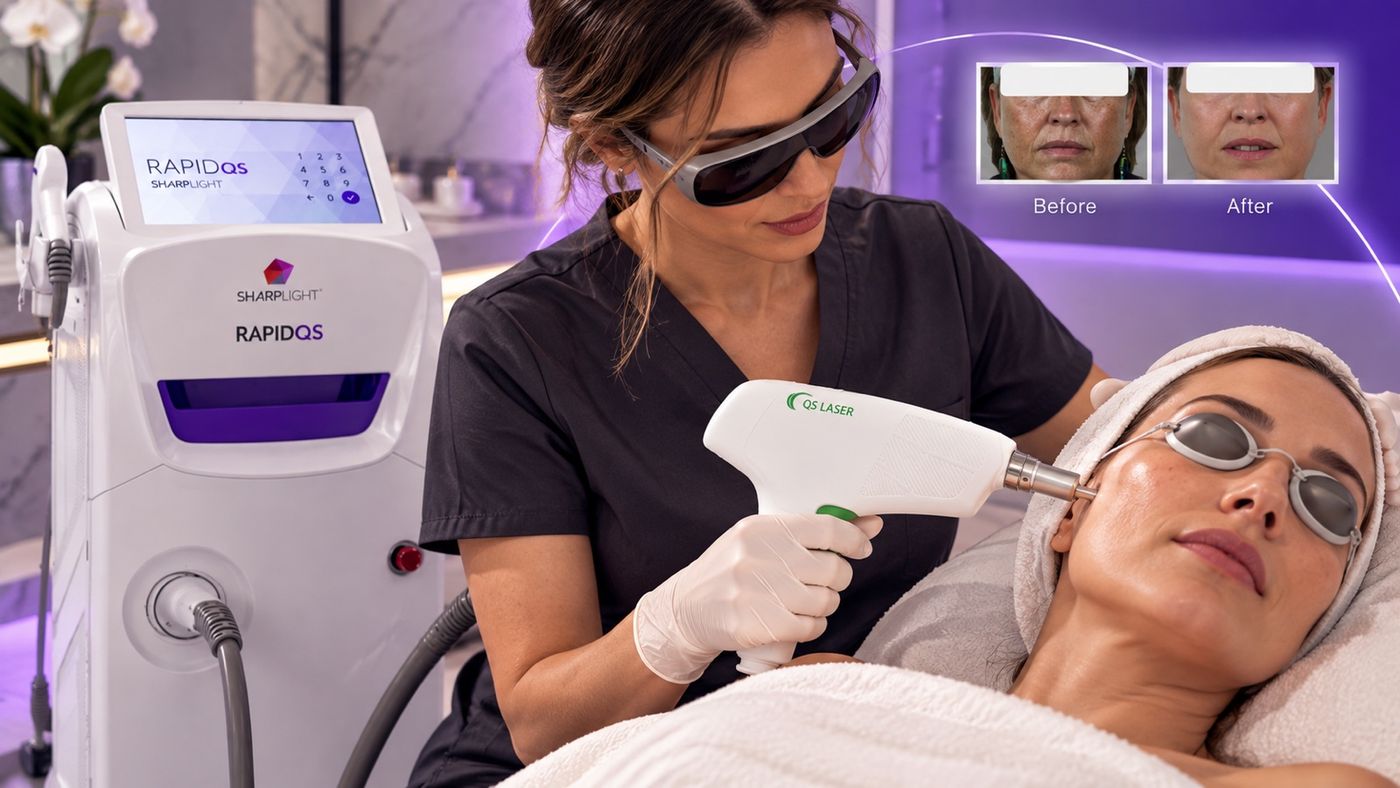
A carbon peel, also called a Hollywood facial or carbon laser facial, combines a topical carbon layer with Q-switched laser energy to exfoliate and refresh the skin. It is primarily used for surface-level concerns and must be planned and delivered by a trained practitioner.
- SharpLight carbon facials use Q-switched Nd:YAG laser technology.
- The treatment is commonly used for congestion, pore appearance, dullness, and uneven texture.
- It is a surface-refining treatment, not a substitute for every tightening, resurfacing, or scar-focused procedure.
- Clinic value depends on patient selection, training, protocol discipline, and realistic expectation setting.
The carbon peel has several popular names, including the Hollywood facial and carbon laser facial. Behind those names is a professional skin-refining protocol that pairs a topical carbon layer with Q-switched laser energy. For prospective patients, the important questions are what the treatment can realistically address and what to expect. For clinics, the larger question is how the service fits into an evidence-conscious treatment menu.
This guide explains both perspectives while keeping product details and treatment planning grounded in SharpLight’s current carbon-facial and Rapid QS materials.
What is a carbon peel?
A carbon peel is a professionally administered facial in which a thin carbon-based layer is applied to the skin and then treated with Q-switched laser energy. The interaction helps remove the carbon along with surface debris and dead skin cells, producing an exfoliating and skin-refreshing effect.
Despite the word “peel,” it is not a chemical peel. The exfoliation comes from the interaction between the carbon layer and laser energy rather than from an acid solution designed to create controlled chemical exfoliation.
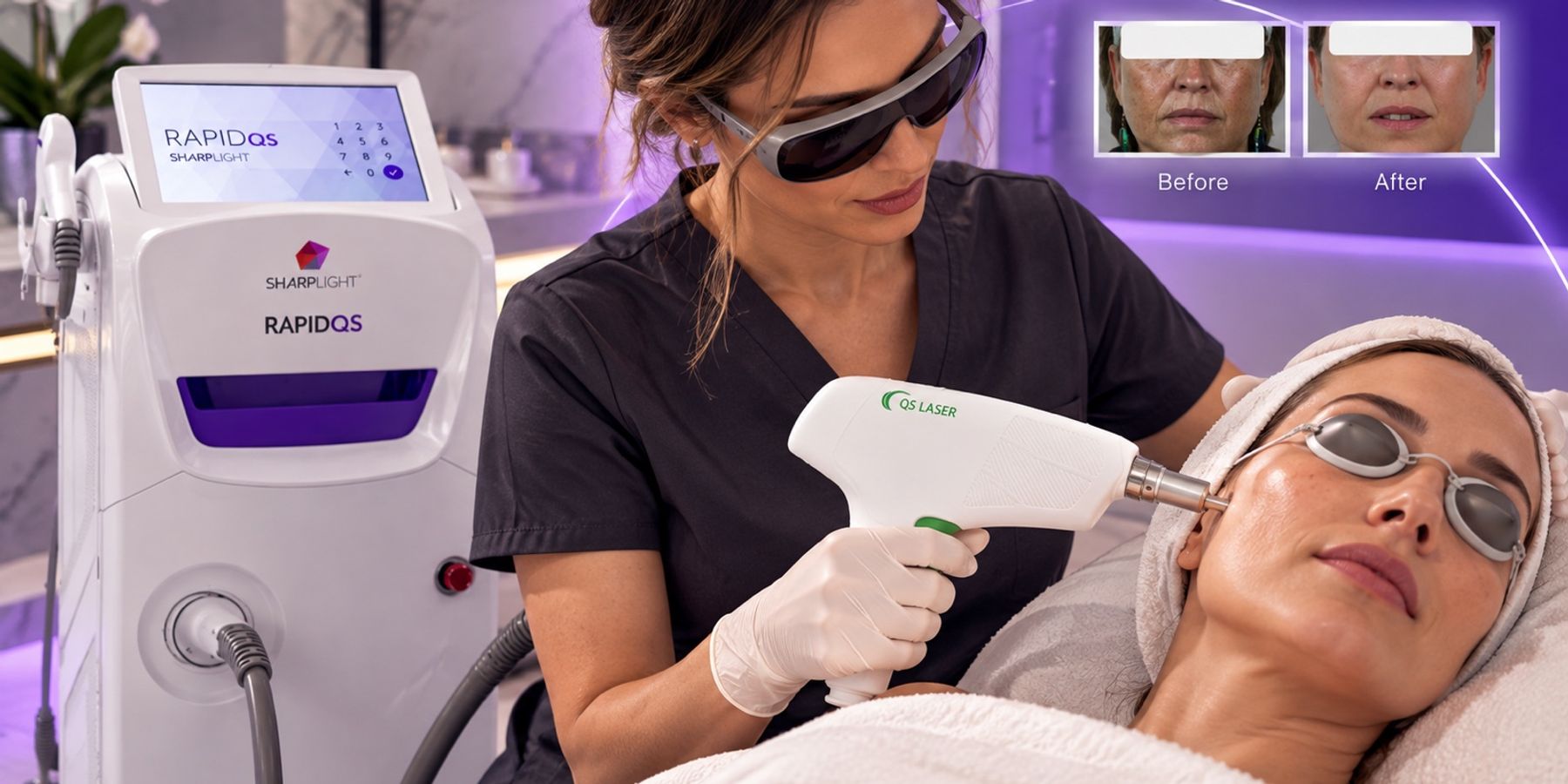
SharpLight’s carbon facial treatment uses a Q-switched Nd:YAG protocol. On the Rapid QS platform, the 1064 nm configuration is used for carbon-facial treatments.
How does a SharpLight carbon facial work?
The exact protocol and settings depend on the platform, practitioner assessment, skin response, and approved clinical guidance. A typical professional workflow includes the following stages:
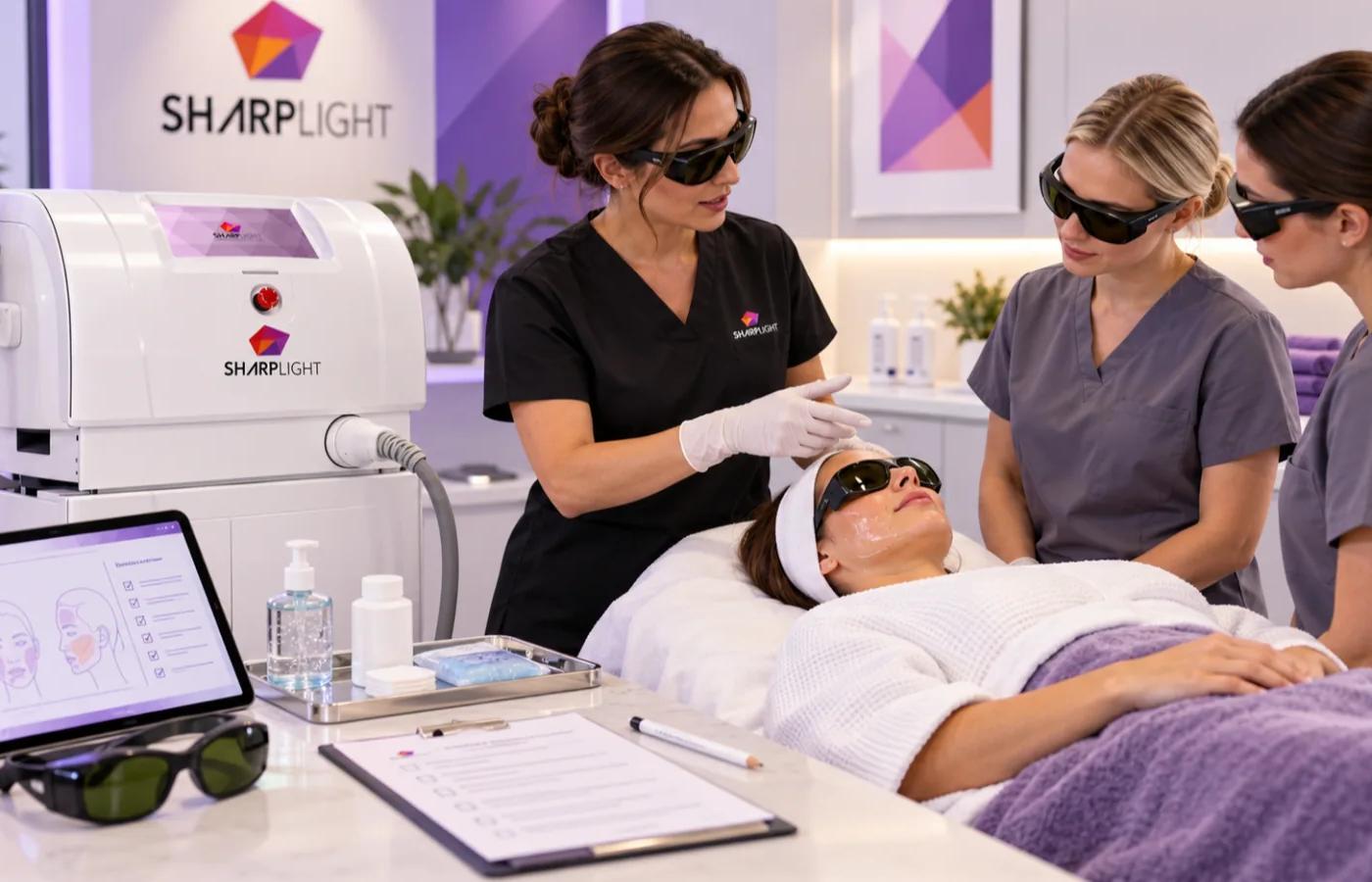
- Consultation and assessment. The practitioner reviews the patient’s concerns, skin profile, relevant history, and suitability for treatment.
- Skin preparation. The treatment area is cleansed and prepared according to the clinic’s protocol.
- Carbon application. A carbon-based mask or photoenhancer is applied to the skin.
- Q-switched laser treatment. The practitioner passes the laser over the carbon-coated skin using settings selected for the patient and the protocol.
- Finishing and aftercare. The treatment area is cleansed, the response is assessed, and the patient receives clinic-specific aftercare instructions.
SharpLight describes the carbon mask as helping absorb surface impurities. The Q-switched laser then heats and removes the carbon particles, helping exfoliate dead skin cells and refine the appearance of skin texture.
Which concerns can a carbon facial address?
Carbon facials are primarily positioned as surface-refining and rejuvenating treatments. Depending on the individual assessment and protocol, clinics may use them when patients are concerned about:
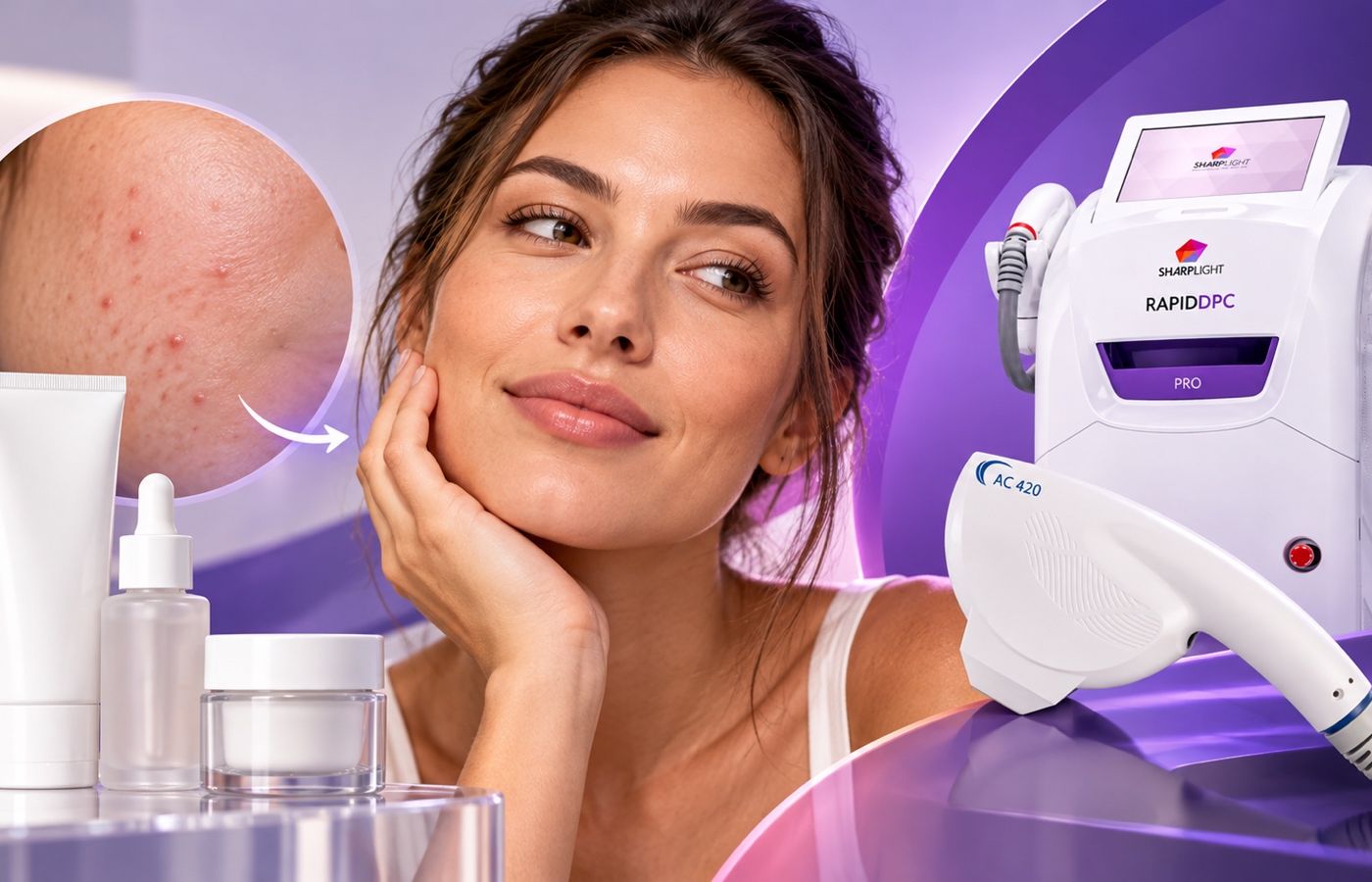
- Oily-looking or congested skin
- The appearance of enlarged pores
- Blackheads, whiteheads, and surface debris
- Dull or uneven-looking skin
- Rough texture
- Fine lines and general skin-refreshing goals
The treatment may also be incorporated into a broader skin-rejuvenation plan. When acne, pigmentation, scarring, or another condition is the primary concern, the practitioner should determine whether a carbon facial is appropriate or whether another treatment pathway is better suited.
What are the limits of a carbon peel?
Clear expectations matter. A carbon facial is a non-invasive, surface-refining treatment; it is not a substitute for every resurfacing, tightening, pigment, or scar-focused procedure. Deeper wrinkles, significant laxity, indented acne scars, and lesions requiring medical assessment may call for a different modality or referral.
A qualified provider should assess new, changing, or unusual marks before cosmetic treatment. Treatment suitability and outcomes vary, and no provider should promise a universal or permanent result.
How is a carbon peel different from other exfoliating facials?
The main difference is the method. Chemical peels use acids at selected strengths to create controlled exfoliation. Microdermabrasion uses mechanical exfoliation. A carbon facial instead combines a topical carbon layer with Q-switched laser energy.
That difference influences the treatment experience, recovery expectations, and the concerns a practitioner may choose to address. Clinics should avoid presenting these services as interchangeable and should recommend them according to assessment rather than trend or name recognition.
How many sessions are normally recommended?
There is no universal schedule. SharpLight’s Rapid QS technical guidance lists carbon-facial treatments at intervals of up to every three to four weeks, with acne-focused protocols potentially performed more frequently under appropriate professional guidance. The actual plan should follow the approved protocol, practitioner assessment, and the patient’s response.
Some people may notice a refreshed appearance after one treatment, while a clinic may recommend a series when the goal is progressive improvement. Maintenance depends on the individual’s skin, concerns, home routine, sun exposure, and treatment plan. Results are not permanent and should not be presented as guaranteed.
What should patients know about aftercare?
Aftercare should come from the treating clinic because it depends on the patient, protocol, and skin response. General guidance commonly emphasizes sun protection, gentle skin care, and temporarily avoiding products or activities that the practitioner believes may aggravate sensitivity.
Patients should follow their clinic’s written instructions rather than applying a fixed rule found online. SharpLight’s broader before-and-after treatment guidance can help patients prepare questions for their provider.
How should someone choose a carbon-facial provider?
A professional consultation should come before treatment. Look for a clinic that assesses skin type and concerns, explains the technology being used, discusses realistic benefits and limitations, provides clear aftercare, and has practitioners trained on the specific system.
Patients should also feel comfortable asking what platform will be used, why the protocol is appropriate for them, what temporary responses may occur, and how the clinic will adjust the plan if their skin responds differently than expected.
Why do clinics add carbon facials to their treatment menus?
For clinics, a carbon facial can provide an approachable entry point into professional laser skin services. It can support conversations about congestion, texture, pore appearance, and general rejuvenation while creating a natural bridge to other services when assessment indicates a different or complementary need.
SharpLight offers the carbon-facial protocol through the dedicated Rapid QS platform and compatible multi-technology platforms. The right fit depends on the clinic’s existing equipment, patient base, staff training, service mix, and growth plan.
Clinics considering stacked services can also review SharpLight’s Carbon Glow Peel treatment spotlight, which discusses combining the Carbon Correcting Peel with radiofrequency as part of a broader facial protocol.
Ultimately, the value of the treatment depends on more than a recognizable name. Appropriate patient selection, practitioner training, protocol discipline, expectation setting, and follow-up determine whether it becomes a credible part of the clinic’s offering.
FAQ
Frequently asked questions about carbon peels
Does a carbon peel hurt?
Treatment comfort varies by person, treatment area, platform, and settings. SharpLight positions its carbon facial as a well-tolerated treatment with minimal discomfort, but a provider should explain the expected sensation and assess the patient throughout the procedure.
How many carbon-peel sessions will I need?
There is no single schedule for everyone. A practitioner should recommend the number and timing of sessions after assessing the patient’s skin, concerns, response, and the approved protocol for the device being used.
Is a carbon peel appropriate for every skin tone?
Suitability depends on the platform, settings, indication, and individual assessment. SharpLight lists Rapid QS carbon-facial protocols for Fitzpatrick skin types I–V. A trained practitioner should confirm suitability rather than relying on a general online claim.
How is a carbon peel different from a chemical peel?
A chemical peel uses an acid solution to create controlled exfoliation. A carbon peel applies a carbon layer and uses Q-switched laser energy to remove it and refine the skin’s surface. The appropriate option depends on the patient’s skin, goals, and professional assessment.
When can someone expect to see a result?
Some patients may notice a refreshed appearance after one session, while other goals may require a professionally planned series. Response and longevity vary, so clinics should set individualized expectations and avoid guaranteeing an outcome.
Which SharpLight system performs carbon facials?
Rapid QS is SharpLight’s dedicated Q-switched Nd:YAG workstation for carbon-facial and tattoo-removal protocols. Compatible multi-technology platforms, including OmniMax S4 configurations with the appropriate Q-switched handpiece, may also support carbon facials.
Carbon facial treatments
Explore carbon facials for your clinic
See how SharpLight’s Q-switched carbon-facial protocol can support a professional skin-rejuvenation menu.
Explore the Carbon Facial