Laser Acne Treatment vs Topicals: What Actually Works
Topicals are the right first step for most mild acne. Here is where light and laser treatments fit, what results realistically look like, and when to see a dermatologist.
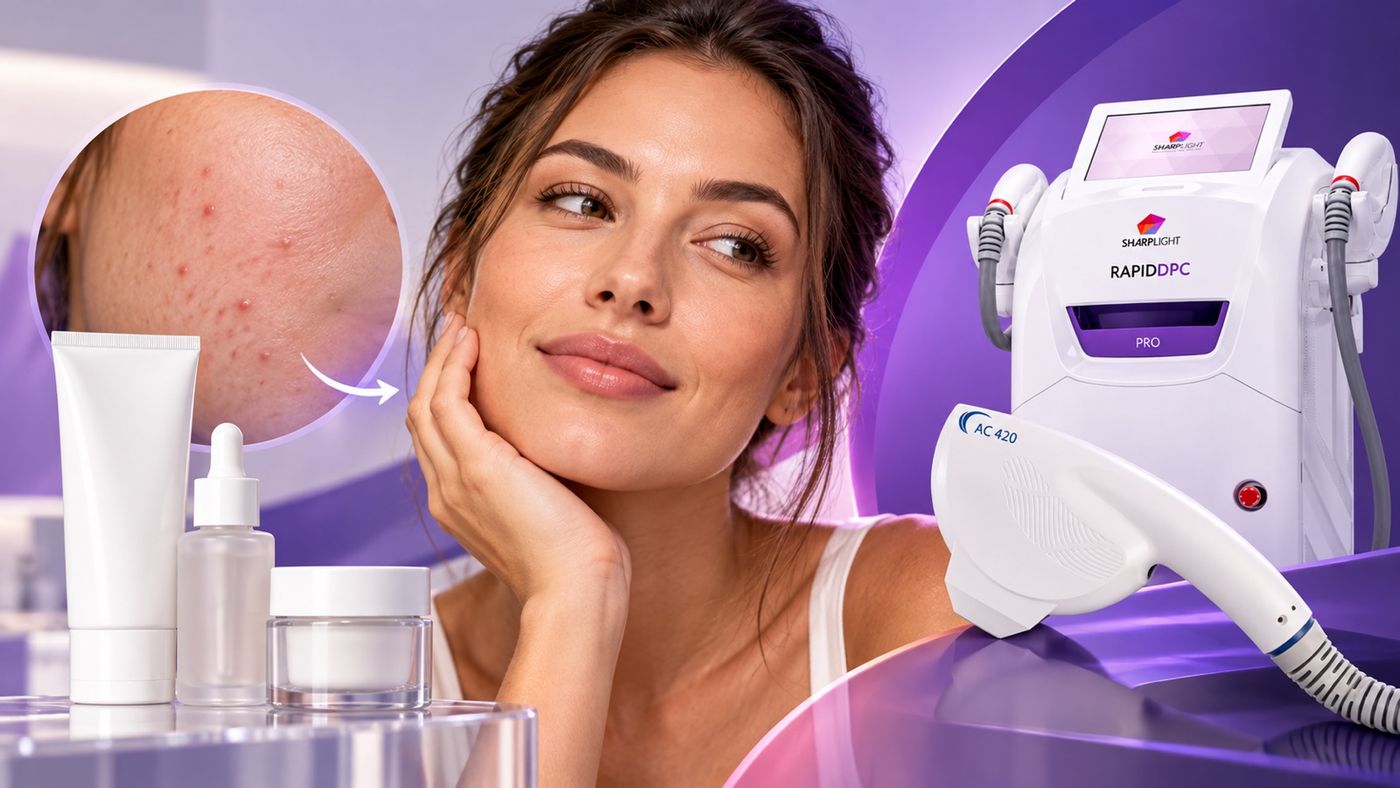
TL;DR — Quick answer
Topicals are usually the first step for mild acne. Professional light- and laser-based treatments may complement a consistent skincare routine when acne persists, while severe or cystic acne should be assessed by a dermatologist.
- Light and laser treatments aim to affect acne-causing bacteria, oil-gland activity, and inflammation.
- They work best as an add-on to a skincare routine, not a replacement.
- Topicals are usually the first step for mild acne.
- Persistent acne may be worth discussing with a provider about light or laser options.
- Severe or cystic acne calls for a dermatologist.
Acne treatment ranges from a $10 cleanser to a series of in-clinic sessions, and the right choice depends on how severe the acne is and how it has responded so far. This guide compares topicals with light- and laser-based treatments, and says plainly when each one makes sense.
This article is educational and is not medical advice. A qualified professional should assess your skin.
Why acne happens
Acne develops when oil (sebum) and dead skin cells clog pores, and the bacterium Cutibacterium acnes (C. acnes) multiplies inside them. The immune system responds with inflammation, which produces redness, papules, and pustules. Hormones, genetics, and other factors influence how active this cycle is.
Key takeaway: effective treatments target one or more of three drivers: excess oil, bacteria, and inflammation.
Topical treatments: what works
Topicals are the usual starting point for mild acne. They are inexpensive and widely available, and they have a long track record.
- Benzoyl peroxide reduces acne-causing bacteria.
- Retinoids help normalize how pores shed skin cells.
- Salicylic acid exfoliates inside the pore.
Topicals take consistency. Many people see change only after several weeks of daily use, and irritation or dryness can happen, especially early on.
Key takeaway: for mild acne, a consistent topical routine is a sensible first step.
Laser and light-based treatments: how they work
Light-based acne treatments use specific wavelengths of light to act on the skin. Depending on the technology, the aim may be to affect C. acnes bacteria, reduce oil-gland activity, or calm inflammation.
Blue light is thought to work on bacteria because C. acnes produces compounds that react to that wavelength. Other light and laser approaches focus on the oil glands or on inflammation. Which effects a given treatment has depends on the device, its wavelength, and the protocol a practitioner chooses.
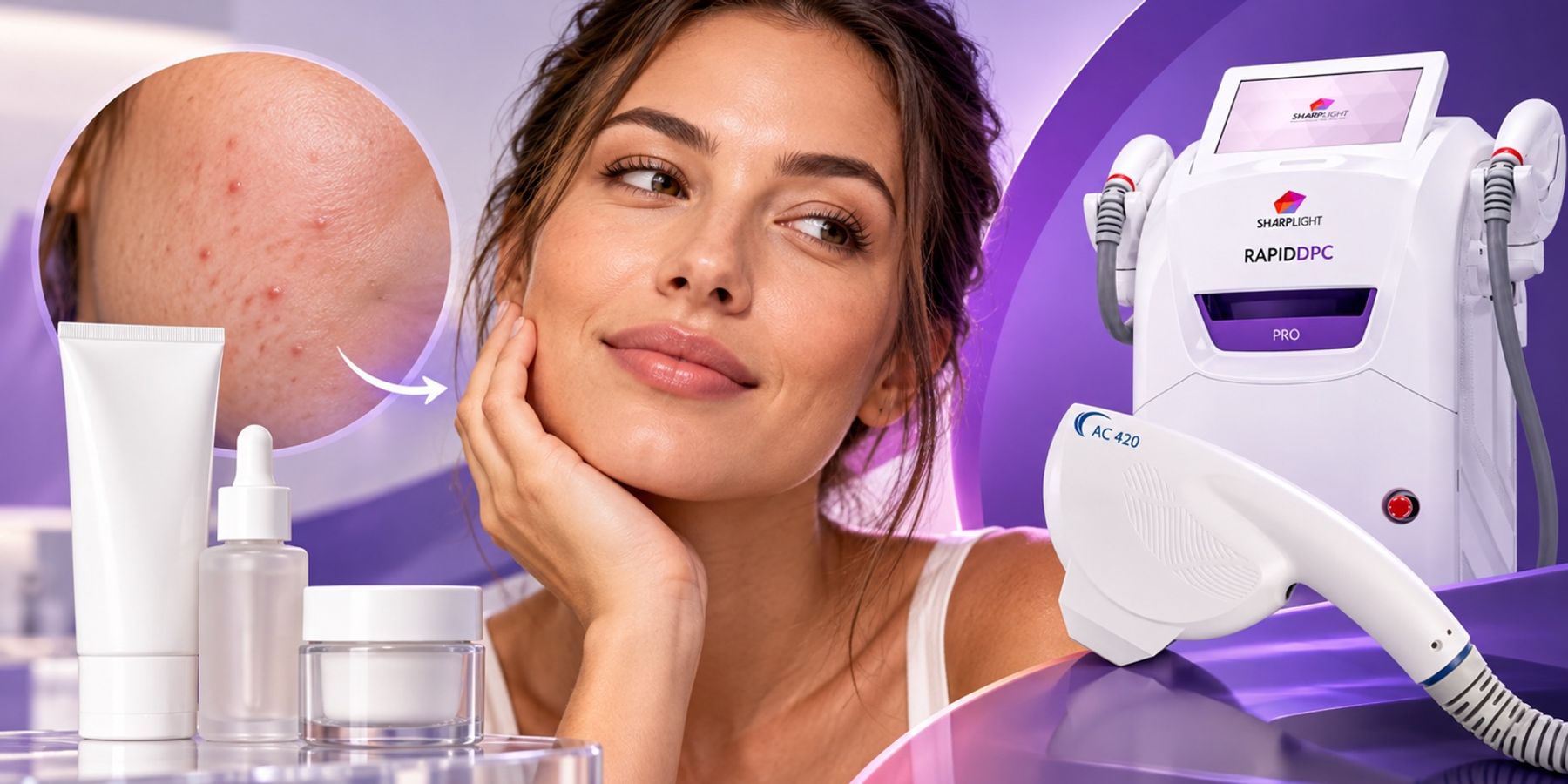
Professional platforms differ in which technologies they include, and SharpLight systems span multiple modalities. Treatment options depend on the specific system and on a practitioner’s assessment.
Key takeaway: “light therapy” covers several distinct technologies, so ask what a specific device does and why.
Laser vs topicals: which is right for you?
Think of it as a ladder, not a contest.
Mild acne
Start with topicals. A few weeks of consistent use is a fair trial, and most people don’t need a procedure at this stage.
Persistent or moderate acne despite topicals
If acne keeps returning after consistent use, a consultation about light or laser treatment as an add-on may be reasonable. Patients often continue their skincare alongside sessions.
Severe, cystic, or scarring acne
See a dermatologist. Deep, painful, or scarring acne may need prescription treatment, which can include isotretinoin (a prescription oral medication), and it needs medical supervision. Light and laser treatments are not a substitute here.
Hormonal patterns
Acne that flares with the menstrual cycle or appears alongside other symptoms is worth raising with a physician, since hormonal factors are managed medically.
Key takeaway: topicals first for mild acne, light or laser as a possible add-on for persistent acne, and a dermatologist for severe or cystic acne.
What results actually look like
Light and laser treatments aim to reduce acne, not cure it. Improvement generally builds over weeks, not overnight, and a course of sessions is typical. The number depends on the person and the protocol.
Acne can return, so maintenance sessions and an ongoing skincare routine are common. Results vary, and no provider can guarantee an outcome.
Key takeaway: expect gradual reduction and ongoing maintenance, not a one-time fix.
Safety and side effects
Temporary redness is a commonly discussed effect after light-based treatments. Skin can also be more sun-sensitive for a period, so sun protection matters. Other effects depend on the technology and the person, and a practitioner should review them beforehand.
Some situations call for extra caution or postponement, such as pregnancy, recent tanning, or certain medications. A qualified professional should screen for these at consultation.
Key takeaway: a proper consultation and screening matter more than any single device feature.
A note for clinics
Clinics considering an acne service should think about patient selection, staff training, protocols, and how the service fits with referral pathways for severe acne. A defined pathway for patients who need dermatology care protects both patients and the practice.
Where SharpLight fits
SharpLight designs professional systems that clinics use for aesthetic services. To see how acne-related care fits with the technology available, read about acne treatment with SharpLight technologies or book a consultation.
For related approaches to concerns left after active acne is controlled, explore SharpLight’s skin rejuvenation treatments.
FAQ
Frequently asked questions
Does laser acne treatment hurt?
Sensation varies by technology, settings, and individual tolerance. Some people describe warmth or mild snapping sensations. A practitioner can explain what to expect and which comfort measures they use.
How many sessions until I see results?
It depends on the person and the protocol. Improvement usually builds over several weeks and across a series of sessions, and your practitioner can outline a plan after assessing your skin.
Can I combine laser with my topical routine?
Often yes, but some topicals, especially retinoids, may need to be paused around treatment. Follow your practitioner’s guidance instead of deciding yourself.
Is it safe for darker skin tones?
Safety depends on the device, its settings, and the practitioner’s experience with your skin type. Darker skin carries a higher risk of pigment changes with some light-based treatments, so ask directly about experience and suitability.
Does it treat acne scars too?
Scars are a different concern from active acne and usually need different treatments. SharpLight’s skin rejuvenation page covers related professional approaches.
Acne treatment options
Not sure which acne approach fits?
Talk with a practitioner about whether light- or laser-based treatment could complement your skincare routine.
Explore acne treatmentKeep reading