Facial UV Damage and Pigmentation: Where Light-Based Treatment Fits
Facial sun damage is really three problems: pigment, texture, and vessels. Learn how practitioners tell sun spots from melasma, where light-based treatment fits, and how to set realistic expectations.
The short version
Facial UV damage combines pigment, texture, and vascular changes, and each responds to different tools. Light-based treatments target brown pigment, but sun spots, freckles, and melasma behave differently, so assessment comes first. Session numbers vary by patient and device. Results depend on ongoing sun protection.
- Light-based treatment targets pigment; texture and fine lines usually need different approaches.
- Sun spots, melasma, and freckles look alike but respond very differently.
- Session count and timelines depend on pigment depth, skin type, and the device used.
- Sun protection is part of the treatment plan, because pigment can return with UV exposure.
Sun damage is one of the most common concerns brought to medical-aesthetic clinics, and one of the easiest to scope incorrectly. “Sun damage” bundles several changes that respond to different tools.
This guide explains what UV exposure does to facial skin, how practitioners distinguish common pigment types, and where light- and laser-based treatments fit. It is written for clinic owners and practitioners, and it is also useful for patient conversations.
This article is educational and is not medical advice. Suitability and protocols require assessment by a qualified professional.
What UV damage actually does to facial skin
Takeaway: UV damage is three separate problems (pigment, collagen, and vessels), and one treatment rarely addresses all three.
Cumulative UV exposure affects the skin in distinct ways:
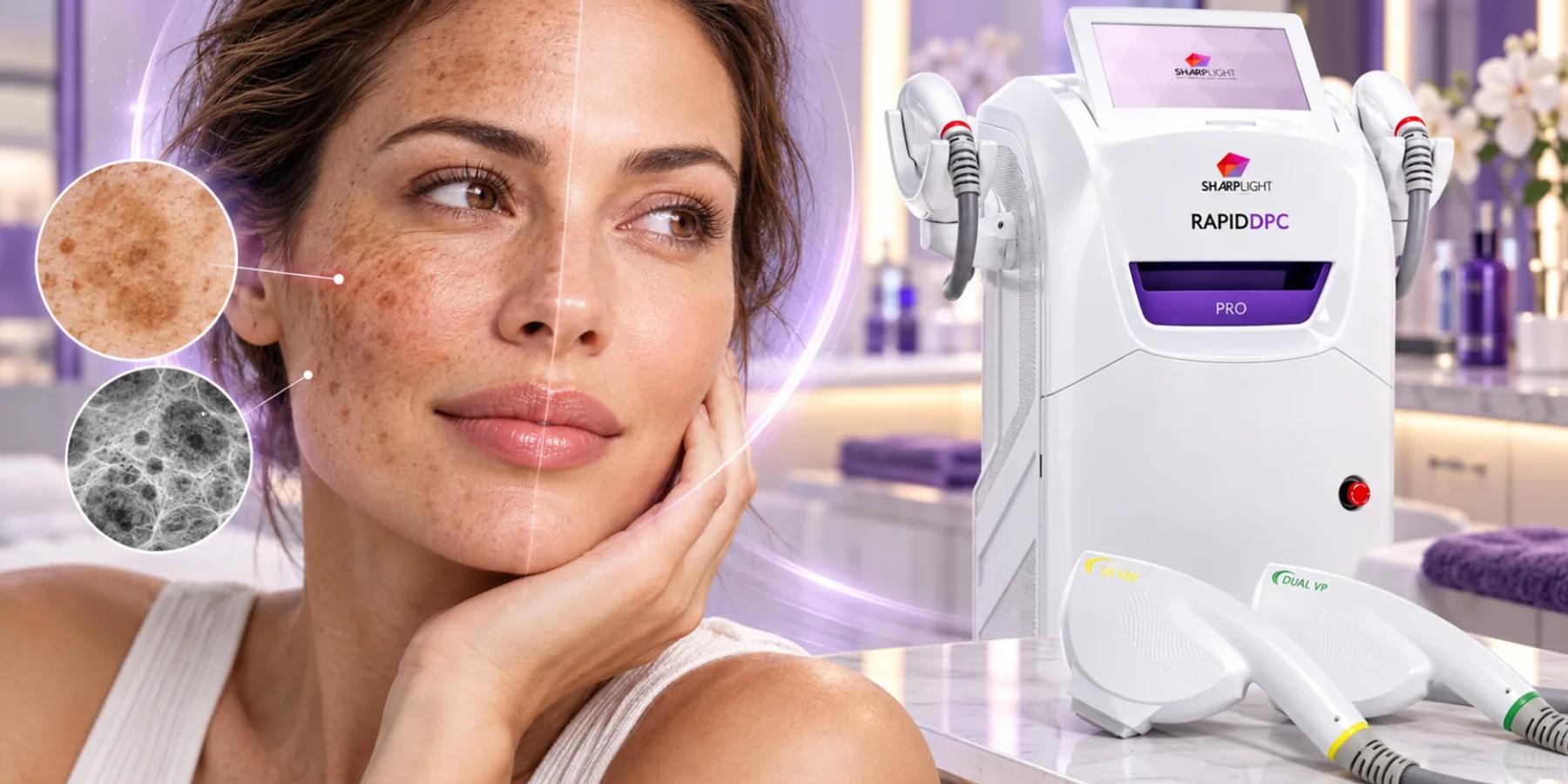
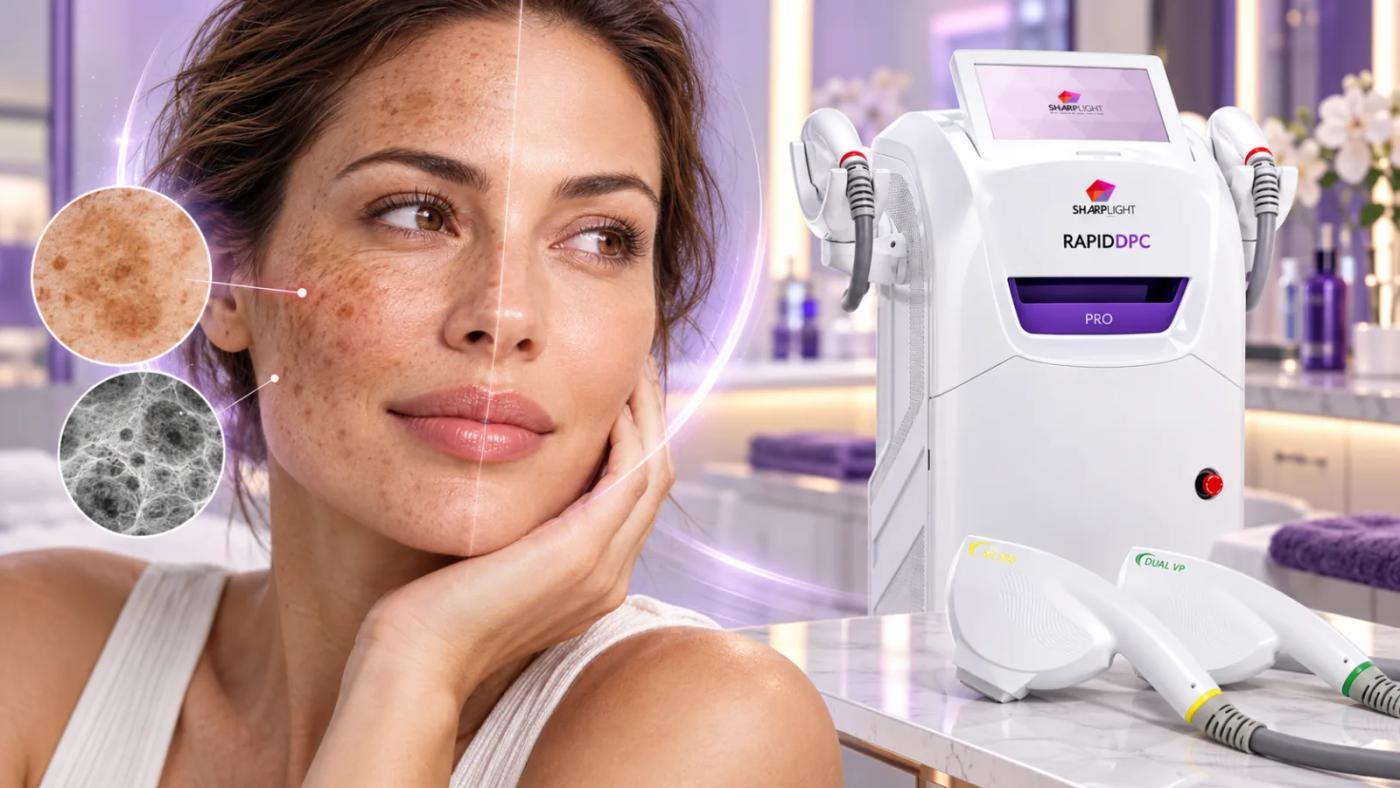
- Pigment: UV stimulates melanocytes, the cells that produce melanin, leading to uneven brown spots.
- Structure: Repeated exposure degrades collagen and elastin, contributing to fine lines and rough texture.
- Vessels: Visible redness and small surface vessels can develop over time.
Photodamage builds over years, so what a patient sees today often reflects exposure from long ago. That is why a consultation should map all three components rather than only the most visible one.
Clinics often pair pigment-focused work with broader skin-refresh services. Treatments like the carbon laser facial are one example of a light-based rejuvenation option that may be part of a wider plan.
Sun spots vs. melasma vs. freckles: why it changes the plan
Takeaway: These conditions can look alike but behave differently, so assessment comes before treatment.
- Sun spots (solar lentigines): Well-defined flat brown spots on sun-exposed areas, linked to cumulative UV exposure.
- Freckles (ephelides): Small spots, often genetic, that tend to darken with sun and lighten in winter.
- Melasma: Larger, patchy, often symmetrical pigmentation associated with hormonal influences and UV. It can be aggravated by heat and inflammation and tends to relapse.
This distinction matters because an approach suited to isolated sun spots may not suit melasma. Practitioners should stay within their scope: identify what is visible, do not diagnose, and refer when unsure.
Refer first: Any spot that is changing, bleeding, or irregular in border or color should be evaluated by a dermatologist before any aesthetic treatment.
How light and laser treatments target pigmentation
Takeaway: Melanin absorbs light energy, and treatment uses that absorption to break up pigment that the body then clears.
Melanin absorbs certain kinds of light. When light energy is delivered to pigmented areas, the absorbed energy converts to heat, which fragments the pigment. Over the following days and weeks, the body clears the fragments.
Two broad categories are commonly discussed:
- IPL (intense pulsed light): Broad-spectrum light, filtered and delivered in pulses, often discussed for diffuse pigmentation and overall tone.
- Pigment-targeting lasers: Single-wavelength devices, often discussed for more isolated or defined spots.
Which approach suits a patient depends on pigment type and depth, skin type, the device, and the practitioner’s training. Protocols should follow the manufacturer’s guidance and local scope-of-practice rules. For how SharpLight approaches these concerns, see our pigmented lesion treatment page.
What pigmentation treatment can and cannot fix
Takeaway: Light-based pigment treatment addresses pigment; lines, laxity, and deeper texture concerns need other approaches.
Light-based treatment is generally discussed for superficial brown spots and uneven tone. It is not a stand-alone answer for:
- Fine lines and crepey texture
- Skin laxity
- Pigment sitting deeper in the skin
- Melasma, which needs a cautious, individualized plan and long-term management
For texture and lines, practitioners typically move to professional skin rejuvenation treatments.
Skin type is a central safety variable. Deeper skin tones carry a higher risk of pigmentary changes with some light-based treatments. That makes skin typing, test approaches where appropriate, and device selection essential.
Sessions, timelines, and what results look like
Takeaway: Session count is set at consultation and varies by patient, so avoid promising a number.
Most plans involve a series rather than a single visit, with follow-up to reassess. The number of sessions and the interval between them depend on the pigment, its depth, the patient’s skin type, and the device protocol.
Treated areas may change in appearance, such as temporary darkening or flaking, before improvement becomes visible. Patients should know this in advance so they do not panic or pick at the skin.
Practice considerations
- Standardize baseline photography using the same lighting, angle, and distance.
- Document skin type, history, and informed consent.
- Build a referral pathway for suspicious lesions.
- Train front-desk and clinical staff to use consistent language: “improve” and “reduce,” never “erase” or “permanent.”
Prevention: why results depend on sun protection
Takeaway: Treated pigment can return with UV exposure, so sun protection is part of the plan.
New pigment can form whenever unprotected UV exposure continues. Daily broad-spectrum sunscreen and sun-avoidance habits protect the result and are also part of pre- and post-treatment care. Specific protocols should follow the treating practitioner’s instructions.
For clinics, aftercare guidance and follow-up visits are a natural place to reinforce this.
FAQ
Pigmentation Treatment FAQs
Does laser remove sun damage permanently?
Treatment can improve existing pigment, but it does not prevent new pigment from forming. Ongoing UV exposure can bring spots back, and melasma can relapse. Results last longest with consistent sun protection and follow-up. No outcome can be guaranteed.
Is IPL or laser better for pigmentation?
It depends. IPL is commonly discussed for diffuse brown spots and overall tone, while lasers are often considered for isolated spots. The right choice depends on skin type, pigment depth, and the device, so a professional assessment should decide.
How many sessions are needed for sun spots on the face?
It varies by patient, pigment depth, skin type, and protocol. Most plans involve a series with reassessment between visits. A practitioner sets the number after consultation and adjusts it based on response.
Can pigmentation come back after treatment?
Yes. Sun spots can return with unprotected UV exposure, and melasma is known to relapse. That is why sun protection and maintenance planning are part of treatment.
Is pigmentation treatment safe for darker skin tones?
Skin type strongly affects risk. Some light-based treatments carry a higher chance of pigmentary changes in deeper skin tones, so settings and device choice are adjusted or certain treatments avoided. Assessment by a trained professional is essential.
Pigmentation treatments
Explore SharpLight’s pigmented lesion treatments
See how SharpLight approaches pigment-related aesthetic concerns and which technologies may support them.
Explore treatments