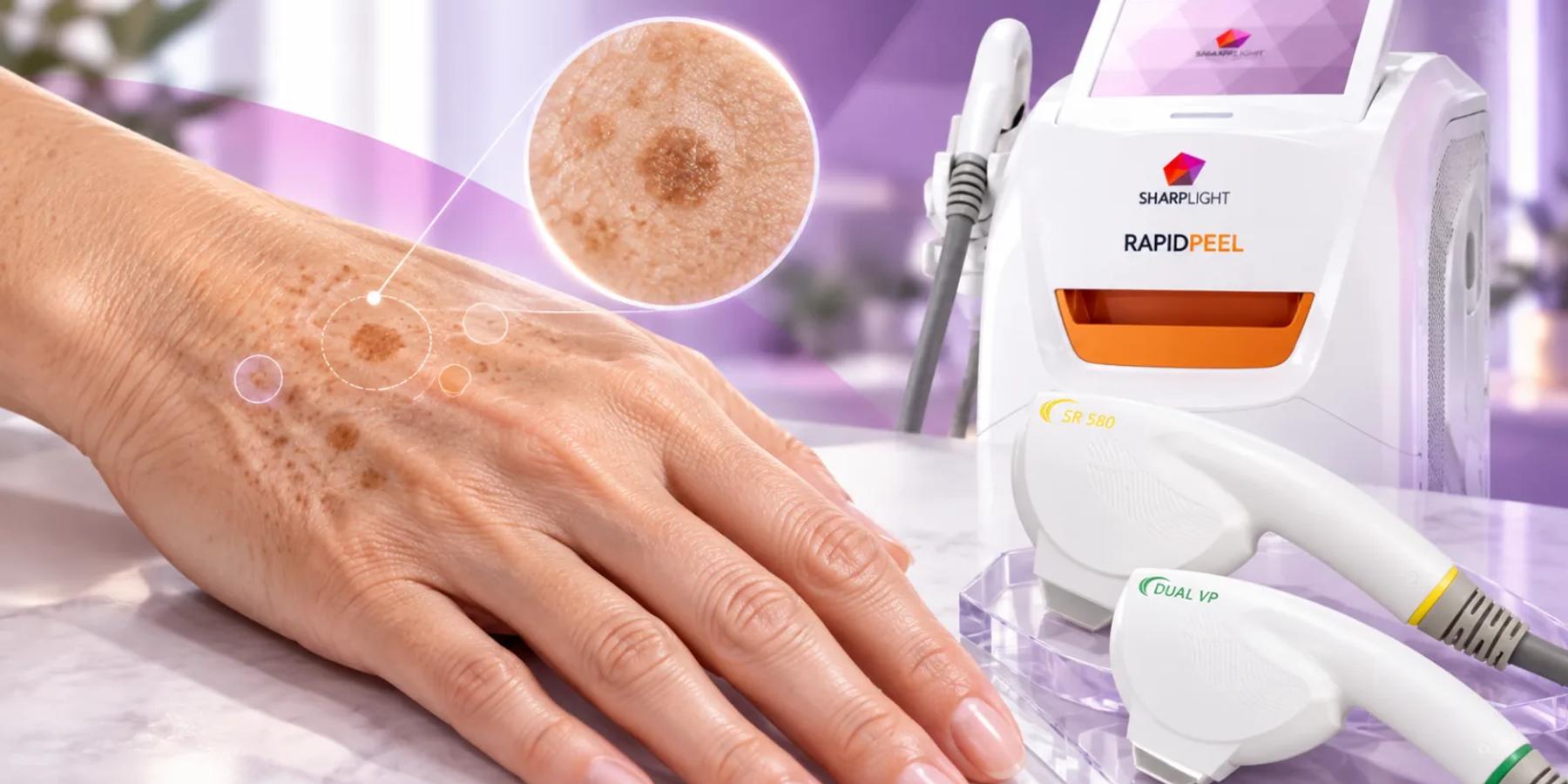
Sun Spots on Hands: What Causes Them and How to Treat Them
Hands show cumulative UV damage early, yet they are often overlooked in consultations. Learn how to assess hand pigmentation, when to refer, how light-based treatment is approached, and how to set realistic expectations.
The short version
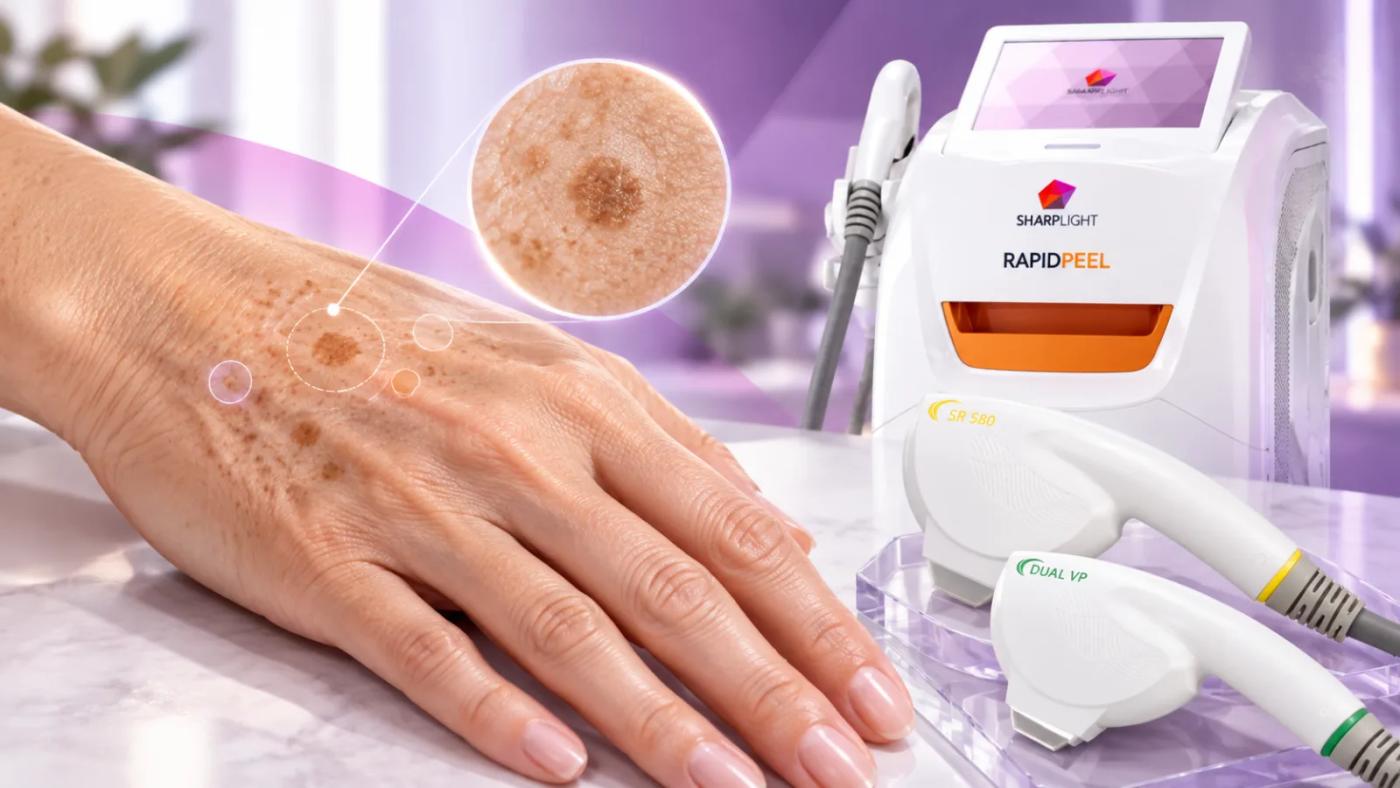
Hands collect years of UV exposure and rarely get sunscreen, so pigmentation shows early. Not every dark spot is a cosmetic sun spot, though, so assessment and referral come first. Light-based treatment targets pigment, but suitability, number of sessions, and results vary by patient and protocol.
- Hand pigmentation is usually cumulative UV damage, and hands are among the most exposed and least protected areas.
- Changing, bleeding, or irregular spots need physician review before any cosmetic treatment.
- Hands differ from the face in skin thickness and tanning patterns, so treatment planning should account for that.
- Results are not guaranteed, and new spots can form without ongoing sun protection.
Hands are one of the first places photodamage shows, yet they are often the last area anyone discusses in a skin consultation. For clinics that offer light-based pigmentation services, that gap is a chance to educate patients and plan treatment more completely. This guide covers why hands age early, how to separate cosmetic sun spots from lesions that need medical review, how light-based treatment is approached, and how to set honest expectations.
Why hands show sun damage early
Hands receive UV exposure for decades: driving, walking, gardening, or holding a phone at the beach. The skin on the back of the hand is relatively thin with little underlying fat, so pigment changes, visible veins, and texture shifts become noticeable sooner.
Protection is the other half of the story. Sunscreen applied to the face in the morning rarely extends to the hands, and frequent handwashing removes whatever was applied.
The flat tan-to-brown spots that result are commonly called sun spots or age spots. Clinically they are often solar lentigines, which reflect cumulative UV exposure more than age itself. That is a useful distinction for patients: the spots are linked to sun exposure, which is why the same concern appears on the face and is explained in more detail in how this works on facial sun damage.
Sun spot, age spot, or something else?
This section matters most for practitioners. Not every dark mark on a hand is a benign sun spot, and cosmetic treatment should never substitute for a medical assessment.
Lesions that need a physician first
Other findings on the hands can look similar at a glance, including raised, waxy lesions, rough or scaly patches, and, rarely, melanoma. Refer for medical evaluation before any energy-based treatment when a spot:
- is asymmetrical or has an irregular border
- contains multiple colors
- is growing or changing
- bleeds, itches, or does not heal
Build referral into your consultation
A consistent workflow protects patients and the clinic. Document findings with baseline photographs, note relevant history such as prior skin cancer or recent sun exposure, and have a clear referral pathway. Treatment suitability and diagnosis sit with qualified professionals working within their scope, not with educational content.
How light-based treatment approaches hand pigmentation
Light-based pigmentation treatments work on a general principle: pigment in the skin absorbs light energy, which is intended to target the pigmented area while limiting effects on the surrounding tissue. The specific technology, parameters, and endpoints depend on the device, the practitioner’s training, and the patient’s skin.
What is different about hands
Compared with the face, planning for hands often involves additional considerations:
- Uneven tanning: Hands frequently carry a different tan level than the face, so skin type and current tan should be assessed for the hands specifically.
- Skin characteristics: Thinner, drier skin and lower fat may affect comfort and how the area recovers, so follow device guidance and your training on treatment parameters.
- Test areas: Many practitioners use a small test area before treating a full hand, per their protocol.
- Spot pattern: Isolated lesions and diffuse mottling may call for different approaches.
Patient selection
Relevant screening includes skin type, recent sun exposure or tanning, medications and conditions that affect photosensitivity, personal history of skin cancer, and healing history. Some patients will not be good candidates, and that is a legitimate outcome of a consultation.
The number of sessions and the interval between them are set through assessment and the applicable protocol. Avoid quoting fixed session counts in marketing or consultations.
Results and keeping them
Set expectations conservatively. Many patients see treated spots lighten, but outcomes vary with pigment depth, skin type, and how closely aftercare is followed. Deeper or mixed lesions may respond differently from superficial ones, and no result should be described as guaranteed or permanent.
New pigmentation can form if UV exposure continues, so aftercare and maintenance belong in the same conversation as treatment:
- Apply broad-spectrum sunscreen to the hands daily and reapply after washing.
- Avoid picking at treated areas.
- Follow the post-treatment instructions for your protocol and book any planned follow-up.
- Consider protective habits such as gloves for driving or outdoor work.
Patient communication that frames sun protection as part of the treatment plan, not an afterthought, tends to support better results and clearer expectations.
Beyond pigment: full hand rejuvenation
Pigment is only one sign of hand aging. Patients may also raise texture, visible veins, and loss of volume. Depending on the platform and its approved indications, some concerns may be addressed with other skin rejuvenation options, and others may fall outside light-based treatment and call for a referral or a different modality.
For clinics, a quick look at the hands during a facial photodamage consultation is a practical way to open the conversation. You can explore how SharpLight approaches pigmented lesions treatment and broader skin rejuvenation treatments when evaluating which services fit your practice.
FAQ
Hand Pigmentation FAQs
Can sun spots on hands be removed permanently?
Treatment can lighten or clear targeted spots, but results are not guaranteed and should not be described as permanent. Continued UV exposure can cause new spots to form, which is why daily sun protection on the hands is part of any plan.
Is light-based treatment on hands painful?
Comfort varies by patient, device, and protocol. Sensations are often described in terms of warmth or a snapping feeling, but no treatment should be promised as painless. Your practitioner can explain what to expect and any comfort measures used.
How many sessions does hand pigmentation usually take?
It depends on pigment depth, skin type, and the protocol used, so the number is set at assessment rather than quoted in advance. Sessions are typically spaced apart to allow the skin to respond.
Can hand creams remove age spots?
Topical brightening ingredients may gradually fade mild, superficial pigmentation, and results are usually slow. Light-based treatment works differently and may suit some patients better, but suitability requires professional assessment.
When should I see a doctor about a spot on my hand?
Get a spot checked before cosmetic treatment if it is changing, irregular, multicolored, bleeding, itching, or not healing. Cosmetic clinics should have a clear referral pathway for these cases.
Grow with SharpLight
Ready to bring advanced aesthetic technology to your clinic?
Talk with our team about the right platform, training, financing, and ongoing support for your business.
Book a demoKeep reading