The Best Professional Body Contouring Machines for Clinics: 2026 Buyer’s Guide
Which body contouring machine fits your clinic? Compare RF, cryolipolysis, laser-based, muscle-and-fat hybrid, and multi-technology systems before you buy.
The short version
The best professional body contouring machine depends on the patients you serve, the treatments you plan to offer, your team’s scope, and how consistently you can use the system. Compare technology class, treatment fit, support, workflow, and total ownership cost—not specifications in isolation.
- Body contouring machines span RF, cryolipolysis, laser-based, muscle-and-fat hybrid, and multi-technology classes, each suited to different treatment goals.
- “Best” depends on your treatment mix, patient volume, team scope of practice, and space, not on spec sheets.
- Compare total cost of ownership per treatment, including applicators, service, training, and financing, rather than only purchase price.
- Choose a dedicated or multi-technology system based on services you will actually offer; confirm supported indications and set expectations from a qualified assessment.
The best body contouring machine is the one that fits your patients, your team, and your treatment menu. A device that works well in a high-volume medical spa may be the wrong purchase for a physician-led practice adding one service.
This guide starts with the decision criteria, then explains the main technology classes, then shows where SharpLight’s Rapid Contour and OmniMax S4 fit. It does not rank third-party brands or quote competitor specifications. Those belong in your own due diligence, and the questions below will help you run it.
How to choose a body contouring machine
Takeaway: decide what you need to treat before you look at what a machine can do.
Start from your patient base, then work toward technology. Most evaluations come down to these questions:
- Concerns and indications: Are you targeting localized fat, skin laxity, the appearance of cellulite, or a mix? Which indications are approved for the specific device in your market?
- Technology class: Does the mechanism match those concerns?
- Treatment areas: Which handpieces or applicators are available, and do they fit the areas your patients ask about?
- Operator scope: Who will perform treatments, and what training and supervision do your province or state and your insurer require?
- Workflow: How long is a session, how many rooms and staff does it need, and can you schedule it profitably?
- Training and support: What clinical training, protocol guidance, and service come with the device?
- Total cost of ownership: What does it cost per treatment once applicators, service, and financing are included?
Technology types: RF, cryolipolysis, laser-based, and hybrid systems
Takeaway: each class works differently, so they are not interchangeable.
| Technology class | General mechanism | Commonly considered for | Clinic considerations |
|---|---|---|---|
| Radiofrequency (RF) | Delivers electrical energy that heats tissue | Skin tightening, contouring, cellulite appearance | Protocols and handpiece size affect treatment areas and session length |
| RF with infrared | Combines RF with infrared heating | Skin tightening and contouring | Ask the manufacturer for device-specific documentation |
| Cryolipolysis | Applies controlled cooling to targeted fat | Localized fat areas | Applicator fit and patient selection matter |
| Laser-based | Uses laser or light energy, with mechanisms that vary widely by device | Varies by device | Evidence and indications differ, so request device-specific data |
| Muscle-and-fat hybrid | Combines electromagnetic muscle stimulation with another modality such as radiofrequency | Muscle stimulation with body-contouring goals, depending on device | Compare the full treatment model, indications, and workflow rather than treating all hybrids alike |
| Multi-technology platform | Houses several modalities in one system | Broad menus across skin and body | Confirm which handpieces are configured for body contouring |
The best professional body contouring machines, compared
Takeaway: compare by technology class and clinic fit, and hold every vendor to the same questions.
This is not a ranking. The examples below map recognizable professional systems to their technology classes so clinic owners can compare mechanisms, workflows, support, and fit using the same criteria.
Cryolipolysis: fat-freezing systems
- CoolSculpting Elite (Allergan Aesthetics, an AbbVie company): A controlled-cooling platform with applicators designed for specific visible fat bulges. Clinics should verify current indications, applicator options, and consumable costs in their market.
- CLATUU Alpha (Classys): A cryolipolysis system that combines controlled cooling with vacuum cup applicators and supports simultaneous treatment with dual handpieces.
- CoolTech Define (Sinclair): A controlled-cryolipolysis system for non-invasive reduction of localized subcutaneous fat. Available applicators and approved uses vary by market.
Laser-based systems
- SculpSure (Cynosure): A 1060 nm hyperthermic laser platform for non-invasive body contouring, with treatment sessions described by the manufacturer as approximately 25 minutes per area.
- Emerald Laser (Erchonia): A low-level laser system using 532 nm green light. Its mechanism differs substantially from heat-based 1060 nm laser platforms, so the two should not be treated as interchangeable.
RF and RF-hybrid systems
- Vanquish ME (BTL): A contactless radiofrequency system designed to address larger treatment areas such as the abdomen, flanks, and thighs.
- Exilis Ultra 360 (BTL): A system combining radiofrequency and ultrasound for face-and-body applications. Device-specific indications and treatment protocols should be confirmed locally.
- BodyFX and MiniFX (InMode): Handpiece-based technologies combining bipolar radiofrequency, negative pressure, and high-voltage pulses for body contouring and the appearance of cellulite.
Muscle-and-fat hybrid systems
- Emsculpt NEO (BTL): A system combining synchronized radiofrequency with HIFEM+ electromagnetic muscle stimulation. It represents a different treatment model from fat-only or tightening-only devices.
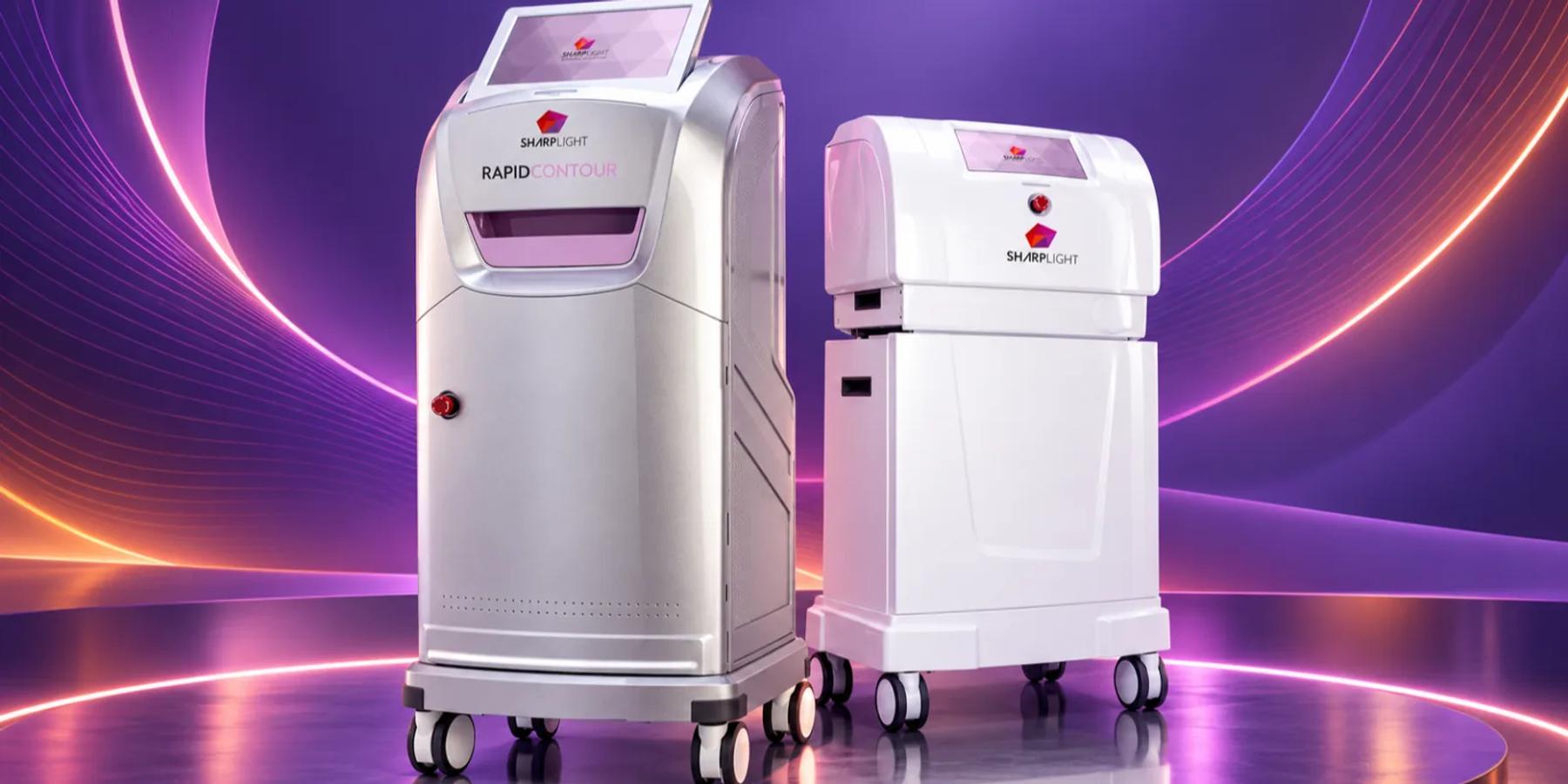
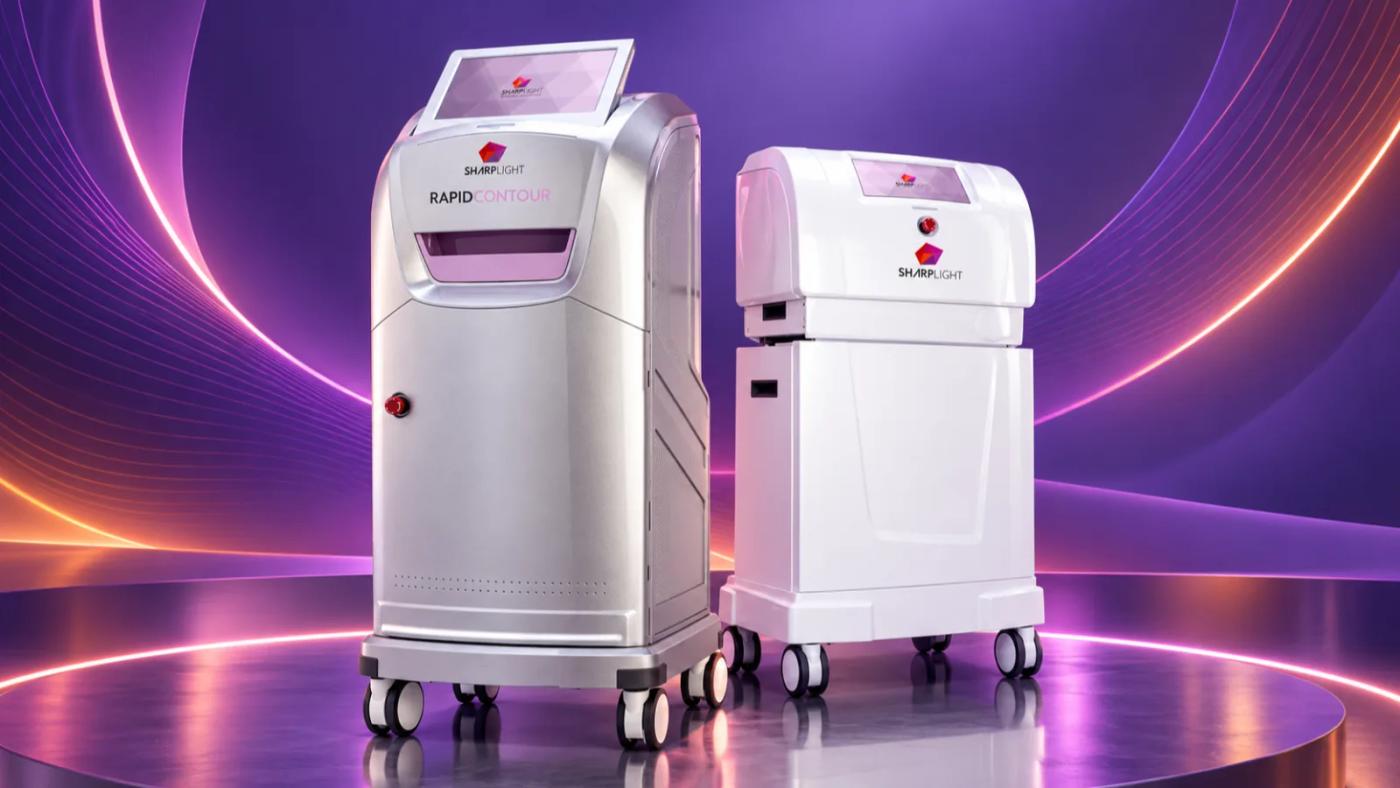
SharpLight’s options span dedicated and multi-technology systems. Rapid Contour combines RF and infrared in a focused workstation, while OmniMax S4 offers a broader platform configuration. That distinction changes the utilization and cost-per-treatment calculation compared with a single-purpose machine.
Rapid Contour: dedicated RF and infrared workstation
- Technology: Radiofrequency and infrared.
- Best for: Clinics that want a focused body contouring and tightening service without committing to a full platform.
- Treatment focus: Contouring and skin tightening, as described on the Rapid Contour product page.
OmniMax S4: multi-technology platform
- Technology: The OmniMax S4 combines DPC™, radiofrequency, VermaDerm™ infrared, and laser modalities in a configurable professional platform.
- Best for: Clinics planning several services across skin, hair, and body that want to consolidate them on one system.
- Body contouring fit: Confirm the installed configuration and handpieces for your intended body treatments with a SharpLight specialist.
Choosing between a dedicated system and a platform is a question of treatment mix and growth plan, not of which has more features. Both sit within SharpLight’s broader partner model, including training through SharpLight Total.
Questions to ask any manufacturer
- Which indications are approved for this exact device in my market?
- What clinical documentation supports the treatment protocols?
- What training and ongoing support are included?
- What are the per-treatment consumable and service costs?
- Which handpieces or applicators are needed for my patients’ priority areas?
Price tiers: what drives cost
Takeaway: compare cost per treatment over the life of the device, not the sticker price.
Purchase price varies widely by technology class, handpiece count, and platform breadth, and this guide does not quote figures that cannot be verified. What matters is how the components add up:
- Upfront cost or financing: SharpLight offers financing options. Confirm current terms with a representative.
- Applicators and consumables: Some technologies carry per-treatment costs and others do not.
- Handpieces and configurations: A modular platform lets you add capability as demand grows.
- Service and warranty: Downtime costs revenue as well as repair fees.
- Training and staffing: Include onboarding time and any certification costs.
- Space and workflow: Room turnover and session length affect how many treatments you can book.
Model these against realistic demand with the ROI calculator before you commit.
Matching the machine to your clinic
Takeaway: utilization decides whether a device earns its place.
Patient volume and mix
A device you use a few times a month has a different case than one you would book daily. A platform that supports several services can spread utilization across them, but only if you will actively offer and market each one.
Staff and scope of practice
Confirm who may operate the device under your regulator, and whether physician oversight is required. Build training time into your launch plan.
Service model
Body contouring is typically delivered as a course of treatments rather than a single visit. Think through packaging, maintenance visits, and pairing with related services such as body tightening and cellulite reduction. Future guides will cover RF body contouring and laser skin tightening in more depth.
What results to promise patients
Takeaway: set expectations from assessment, not from marketing.
- Results vary. Outcomes depend on the patient, the area, the device, and the protocol. Do not guarantee a result.
- Treatments are typically a course. Discuss the recommended number of sessions from the manufacturer’s protocol and your own assessment.
- Contouring is not weight loss or surgery. Position it as an aesthetic treatment, not a substitute for either.
- Do not call results permanent. Lifestyle and aging continue to affect the body.
- Screen carefully. Suitability and contraindications need assessment by a qualified professional. Refer patients to a physician when a concern is medical.
- Document consistently. Use standardized before-and-after photography, with consent.
A future guide will examine the patient-facing benefits of body contouring. To see how these criteria apply to your clinic, explore SharpLight’s body contouring treatments or skin rejuvenation options.
FAQ
Body Contouring Machine FAQs
What is the best professional body contouring machine?
It depends on your patient concerns, treatment volume, and team. RF-based systems commonly suit tightening and contouring. Cryolipolysis suits localized fat. Multi-technology platforms suit clinics offering several services. Match the technology to the treatments you plan to sell.
How much does a professional body contouring machine cost?
Cost varies with technology class, handpieces, and platform breadth. Compare total cost of ownership, including applicators, service, training, and financing. Ask each manufacturer for current, written pricing for the exact configuration you need.
Are at-home body contouring devices comparable to professional machines?
No. Consumer devices are designed differently from professional systems, which are operated by trained practitioners under clinic protocols. Set patient expectations accordingly and avoid direct comparisons.
What certifications or training are required to operate one?
Requirements vary by province or state, profession, and device. Confirm with your regulator, your insurer, and the manufacturer before purchase, and plan training into your launch.
How profitable is body contouring for a clinic?
It depends on utilization, pricing, staffing, and how well you market the service. Outcomes cannot be guaranteed. Model your own treatment volume, pricing, and costs before investing.
See it in practice
Compare body contouring systems with a SharpLight specialist
Talk through your treatment mix, team, and growth plan, and see which SharpLight system fits your clinic.
Book a device demo