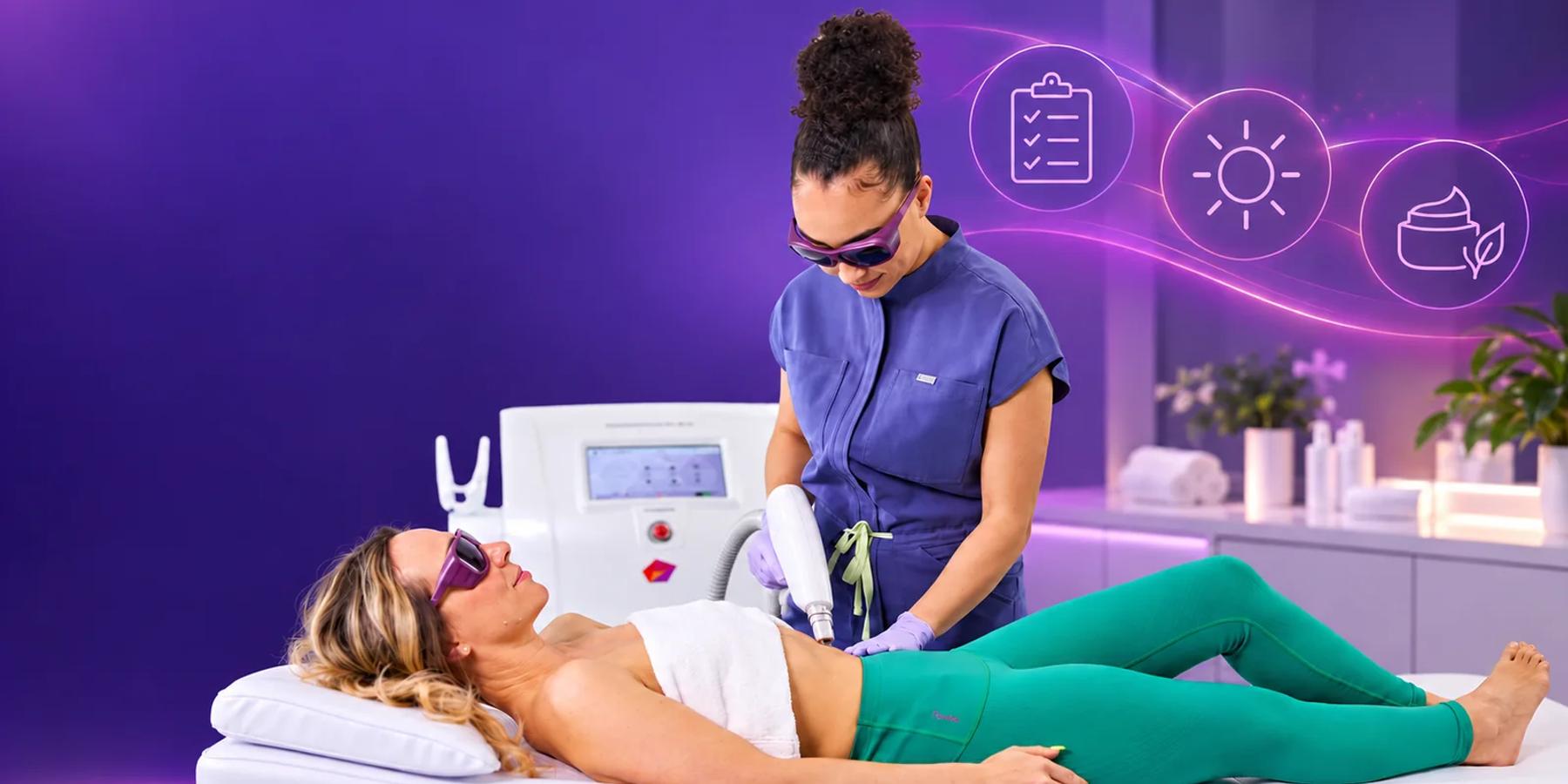
Tips for Before and After Treatment: Your Prep and Aftercare Guide
What you do before and after a laser or light-based treatment affects comfort, recovery and results. Learn the universal preparation rules, modality-specific aftercare and when to call your provider.
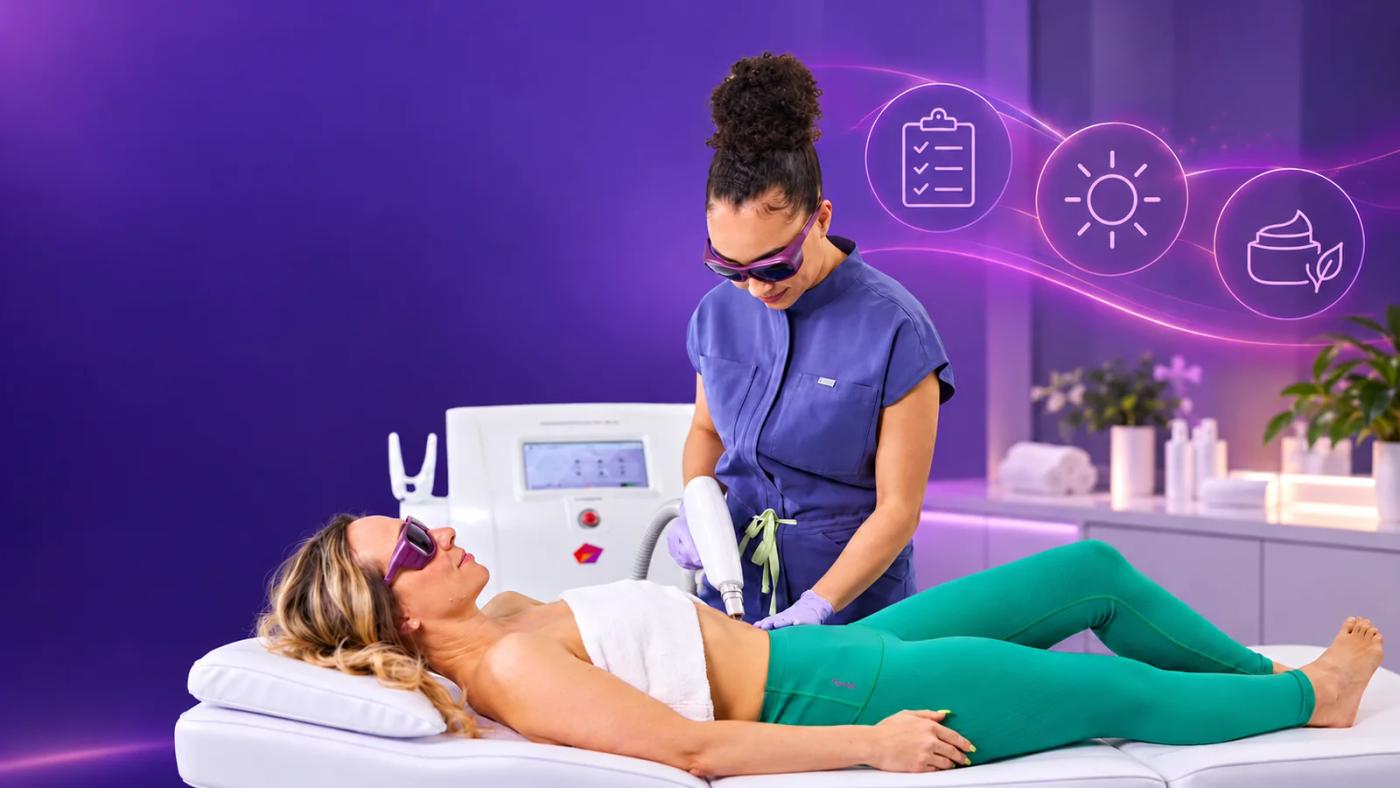
TL;DR — Quick answer
What you do before and after a laser or light-based treatment affects comfort, recovery and results. This guide covers common preparation rules, what healing may look like, how aftercare differs by modality and when to call your provider.
- Avoid tanning and self-tanner, protect the treatment area from the sun, and pause irritating skincare only as your provider directs.
- Aftercare is not one-size-fits-all: hair removal, IPL-type treatments and fractional ablative resurfacing have different recovery needs.
- Mild redness or warmth may be expected, but contact your provider about reactions that are unexpected, worsening or outside your written recovery plan.
- Consistent sun protection, gentle care and completing the provider-directed treatment plan help protect your results.
Five rules cover most laser and light-based treatments: protect your skin from the sun and avoid tanning; pause irritating skincare when your provider asks; prepare the area exactly as directed; disclose every medication, supplement and skin product; and schedule treatment around planned sun exposure and important events. Exact instructions depend on the device, treatment area, skin type and treatment intensity, so your provider’s written protocol always overrides general guidance.
For clinics, preparation and aftercare are also part of treatment delivery. Written instructions make expectations, recovery steps and escalation procedures consistent for every patient.
This article is educational and is not medical advice. Treatment suitability and protocols require assessment by a qualified provider.
Why preparation matters
Laser and intense pulsed light treatments deliver energy to a target in the skin, such as pigment or hair. Tanned, sunburned or irritated skin may absorb and respond to that energy differently. Most preparation rules are designed to keep the treatment area calm, predictable and ready for assessment.
Before your treatment: one week out
Limit sun exposure and avoid tanning. Tanned or sunburned skin contains more active pigment and may be more reactive. Use broad-spectrum sunscreen on the treatment area and avoid tanning beds.
Ask about retinoids and exfoliants. Retinoids, exfoliating acids and similar active products may leave skin more sensitive or irritated. Your provider should tell you whether and when to pause them.
Review medications, supplements and topical products. Some can affect light sensitivity or healing. Disclose everything you use during consultation. Your provider decides what applies to you; do not stop or change prescribed medication on your own.
For hair removal, shave rather than wax. Waxing, tweezing and epilation remove hair from the follicle. Professional light-based hair reduction needs hair to remain within the follicle so its pigment can absorb the treatment energy. Follow your provider’s exact shaving timeline.
The final 48 hours—or earlier if your provider directs
- Avoid self-tanner. Surface colour can interfere with assessment and treatment.
- Arrive with clean skin. Skip makeup, lotion, perfume and deodorant on the treatment area unless your provider says otherwise.
- Follow any test-patch instructions. A provider may test a small area before proceeding with a full treatment.
- Report changes. Tell the clinic about a new rash, cold sore, sunburn, illness or medication change before the appointment.
During recovery: what may be normal
Recovery varies by modality and treatment intensity. Mild redness, warmth, sensitivity or swelling may occur after treatment. After an IPL-type photo facial, targeted pigment can temporarily darken before it flakes or fades. Fractional ablative resurfacing can involve a more active healing process and requires its own provider-directed wound-care plan.
Ask your provider what is expected for your exact protocol before treatment begins. Knowing the expected recovery window makes it easier to distinguish routine healing from a response that needs attention.
Aftercare by treatment type
These are broad treatment categories, not universal timelines. Device settings, treatment depth, skin response and the area treated can materially change recovery. Follow the written instructions from the provider who performed your treatment.
| What to compare | Hair removal | Photo facial / IPL-type rejuvenation | Fractional ablative resurfacing |
|---|---|---|---|
| Typical recovery | Mild redness or bumps around follicles | Mild redness; targeted pigment may temporarily darken | More active healing that varies by depth and intensity |
| Sun exposure | Strict protection | Strict protection | Strict protection throughout healing |
| Heat and exercise | Pause for the period advised | Pause for the period advised | Resume only when cleared by the provider |
| Skincare | Gentle, fragrance-free products; pause actives until cleared | Gentle products; pause actives as advised | Use only the provider-directed wound-care regimen |
| Touching or picking | Avoid rubbing the area | Do not pick at darkened or flaking spots | Do not pick, peel or remove healing tissue |
| Follow-up | Between sessions or if a response concerns you | As advised between sessions | Follow the scheduled clinical review plan |
Learn more about SharpLight’s professional hair-removal treatments, photo facial treatments and fractional resurfacing protocols.
Warning signs: when to call your provider
Recovery expectations differ, especially after ablative resurfacing. Contact your provider whenever a reaction is unexpected, worsening or outside the written plan they gave you. Reasons to call can include:
- Unexpected blistering, broken skin, oozing or crusting
- Increasing swelling, spreading redness or worsening warmth
- Possible signs of infection, including pus or fever
- Pain that increases rather than eases
- Colour or texture changes that persist or worsen beyond the expected recovery period
Call the treating clinic early if you are uncertain. For a severe reaction or rapidly worsening symptoms, seek urgent medical care.
How to protect your results
Be consistent about sun protection. UV exposure can irritate recently treated skin and contribute to unwanted pigment changes.
Complete the treatment plan. Many concerns require a series of appointments, and maintenance varies by modality, patient and goal.
Avoid unnecessary irritation. Tanning, aggressive exfoliation and picking at treated skin can disrupt recovery.
Keep follow-up appointments. A provider can assess the response and adjust the plan before the next session.
For a deeper explanation, read how professional laser hair removal works and how different skin-rejuvenation treatments target pigment, texture and collagen. If you are comparing providers, use our Calgary clinic-choice guide as a practical consultation checklist.
Looking for treatment? The SharpLight Clinic Finder can help you locate a clinic equipped with SharpLight technology.
For clinics: build an aftercare protocol patients can follow
Verbal guidance is easy to forget, especially when a patient is focused on the procedure itself. A repeatable protocol keeps preparation, expected recovery and escalation instructions consistent across practitioners and treatment types.
- Send written pre-treatment instructions when the appointment is booked.
- Document consent and set expectations for the likely treatment course.
- Use a modality-specific aftercare sheet rather than one universal checklist.
- Give patients a clear contact route and define which reactions require a call.
- Schedule follow-up and maintain photo documentation according to clinic policy.
SharpLight partners can use SharpCare support and practical training preparation resources to help teams build repeatable workflows around their platforms.
FAQ
Frequently asked questions
Can I wear makeup before laser treatment?
Generally, arrive with clean, product-free skin on the treatment area. Instructions vary by treatment type and provider, so follow the directions supplied by your clinic.
How long does redness last after laser treatment?
It can range from a few hours to several days depending on the modality and treatment intensity. Fractional ablative resurfacing may involve a longer and more active healing process. Ask your provider what is expected for your exact protocol.
What should I avoid after laser treatment?
Common restrictions include sun exposure, tanning, excessive heat, active skincare ingredients, and picking or rubbing the area. The required timeline varies by treatment, so your provider’s written aftercare instructions take priority.
When can I exercise after laser treatment?
That depends on the treatment and your skin response. Heat and sweat may irritate recently treated skin, so confirm the appropriate waiting period with your provider rather than relying on one universal timeline.
Can I have laser treatment if I take medication?
Some medications and supplements can affect light sensitivity or healing. Disclose everything you take during consultation. Your provider will decide what is appropriate, and you should not adjust prescribed medication yourself.
TRAINING & CLINICAL SUPPORT
Build an aftercare protocol your clients can follow
Talk with our team about training, clinical guidance and the right SharpLight platform for your treatment menu.
BOOK A DEMO