The Best Skin Laser Facials, Compared (2026 Guide)
There is no single best laser facial. Compare IPL, carbon, fractional, and non-ablative options by concern, recovery, treatment planning, and patient suitability.
TL;DR — Quick answer
No single laser facial is best for every patient. IPL is commonly considered for sun-related pigment and redness, carbon facials for a lighter refresh and oiliness, fractional lasers for texture and scar appearance, and non-ablative lasers for gradual improvement with less recovery. The right choice depends on the concern, skin type, device, settings, and provider.
- “Best” depends on the primary concern and the individual patient.
- IPL is commonly used for sun-related pigmentation and visible redness.
- Carbon facials are generally lighter and more maintenance-oriented than corrective resurfacing.
- Fractional and non-ablative laser treatments differ substantially in intensity and recovery.
- Ask which device and protocol the clinic uses, why it suits your skin, and what recovery to expect.
No single laser facial is best for everyone. Match the treatment to the main concern: IPL is commonly considered for pigment and redness, carbon facials for a refreshed appearance and oiliness, fractional lasers for texture and scars, and non-ablative lasers for gradual improvement with less recovery.
“Laser facial” is often used as a catch-all term, even though some treatments—most notably intense pulsed light (IPL)—are not technically lasers. The useful comparison is not the marketing name. It is the treatment mechanism, the concern being addressed, the expected recovery, and whether the protocol suits the patient’s skin.
How we compared these facial treatments
These options are compared across four practical criteria: the concern they are commonly used for, expected recovery, treatment planning, and suitability for the individual patient. A treatment that offers more intensive correction may also involve more downtime or risk.
Two terms matter throughout. Ablative treatments remove part of the skin’s outer layer. Non-ablative treatments work without removing the surface, generally producing a shorter recovery and more gradual change.
Skin tone, medical history, recent sun exposure, medications, active skin conditions, and previous procedures can all change what is appropriate. A qualified provider should assess these factors before recommending a device or protocol.
Takeaway: compare treatments by concern, recovery, and patient suitability—not by a single “best” score.
For the broader science behind these approaches, see what skin rejuvenation is and how it works.
Laser facial comparison at a glance
The table below provides a high-level comparison. Exact settings, recovery, and treatment plans vary by device, provider, treatment depth, and patient response.
| Treatment type | Commonly considered for | Recovery considerations | Treatment planning | How results develop |
|---|---|---|---|---|
| IPL photofacial | Sun-related pigmentation and visible redness | Often limited, although temporary redness, swelling, or darkening of spots may occur | Frequently planned as a series, depending on the concern | Changes develop as treated pigment or vessels respond over time |
| Carbon laser facial | Oiliness, pore appearance, acne-related concerns, and an overall refreshed look | Often limited; temporary redness or sensitivity can occur | May be recommended as a series or maintenance treatment | Changes may be subtle and build across the treatment plan |
| Fractional laser facial | Texture irregularities, acne-scar appearance, and resurfacing goals | Ranges from mild redness to a longer visible recovery depending on whether treatment is ablative and how deeply it is delivered | Varies widely with the laser type and treatment depth | Improvement develops during healing and remodeling |
| Non-ablative laser facial | Fine lines, uneven tone, and gradual collagen-focused improvement | Generally shorter than ablative resurfacing, but redness and swelling may occur | Often uses a staged plan rather than one intensive visit | Results are generally gradual |
Use the table to narrow the options, not to self-prescribe a treatment. The same category can include devices with different wavelengths, pulse structures, energy delivery, approved indications, and operator requirements.
IPL photofacial: commonly chosen for sun damage and redness
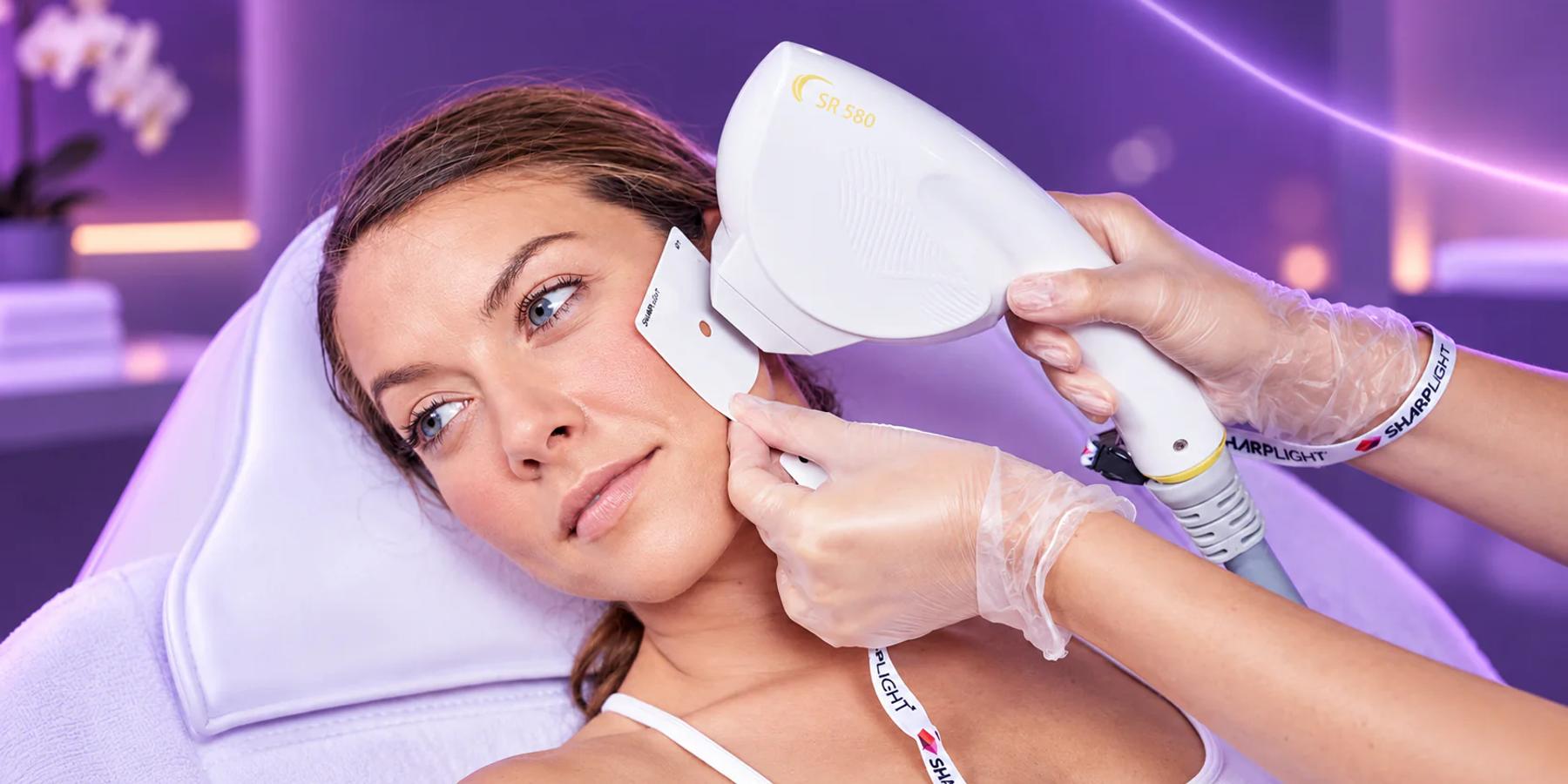
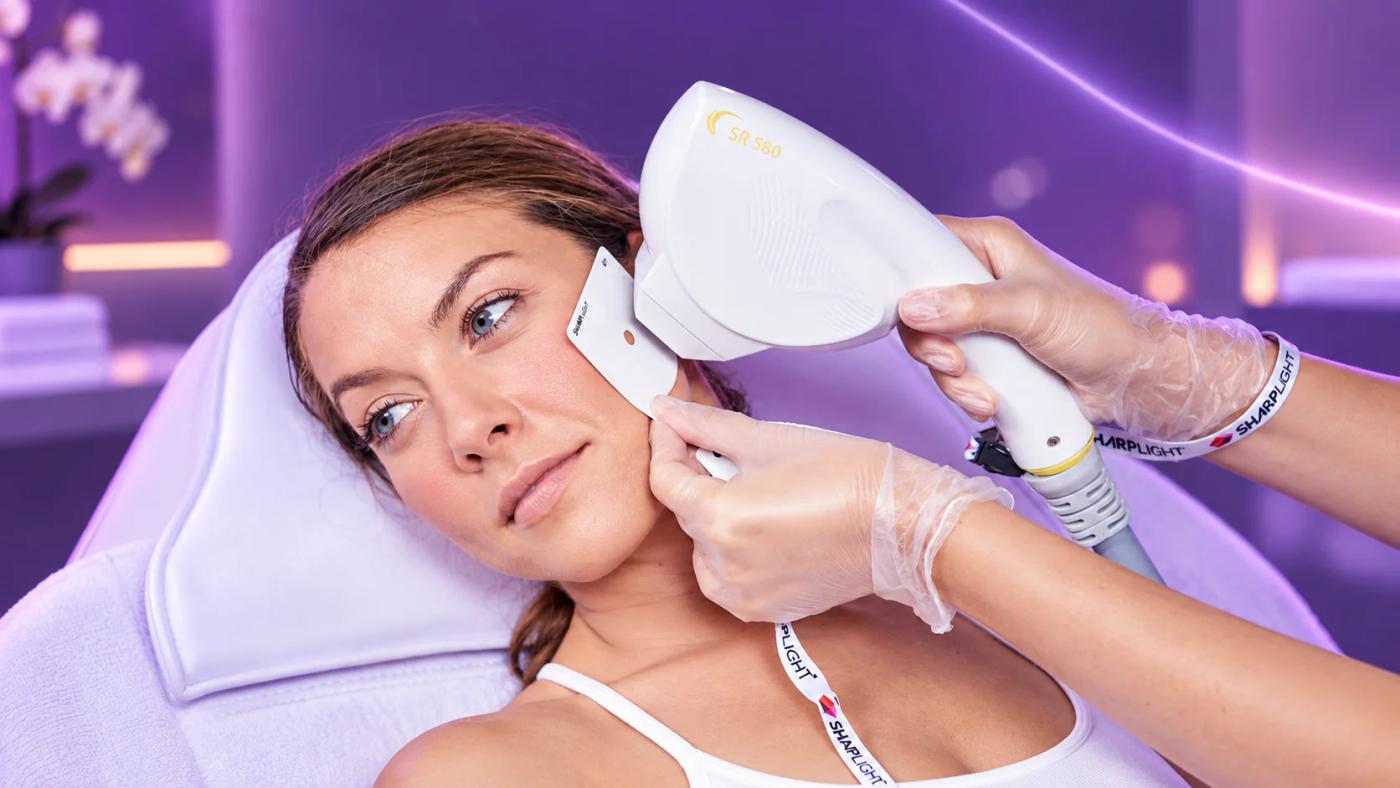
IPL uses filtered broad-spectrum light rather than a single laser wavelength. It is commonly used for sun-related pigmentation and visible redness because different filters and settings can be selected for specific targets.
Pigment and blood vessels absorb light energy differently from surrounding tissue. After treatment, some pigmented spots may temporarily darken before fading or flaking. Redness and mild swelling can also occur. Response varies by concern, skin type, device, and settings.
Consider discussing IPL when scattered sun spots, uneven tone, or diffuse redness are the main concern and a lower-recovery approach is preferred. It is not primarily a texture-resurfacing treatment, and it should not be used on a lesion that has not been properly assessed.
Takeaway: IPL is primarily a colour-targeting treatment, not a substitute for deeper resurfacing.
Clinics offering this service can see how SharpLight frames it on the photo facial treatment page. For a deeper look at sun-related pigmentation, read UV damage and pigmentation correction for the face.
Carbon laser facial: a lighter option for oiliness and pore appearance
A carbon laser facial combines a topical carbon suspension with a compatible laser protocol. The carbon is applied to the skin before the laser passes over the treatment area.
Published studies have examined carbon-assisted Q-switched Nd:YAG protocols for concerns including acne lesions and the appearance of enlarged pores. The evidence base is smaller than it is for established resurfacing categories, and outcomes depend on the actual laser, protocol, and patient—not simply the phrase “carbon facial.”
This option is often positioned as a lighter refresh for patients concerned about oiliness, congestion, pore appearance, or overall skin quality. It should not be presented as equivalent to a more intensive pigment, vascular, or scar treatment.
Takeaway: carbon facials are typically lighter and more maintenance-oriented than corrective resurfacing.
Our Carbon Peel, or Hollywood Facial, guide explains the treatment and its limitations in more detail.
Fractional laser facial: considered for texture and acne-scar appearance
Fractional lasers deliver energy in a pattern of microscopic treatment columns while leaving tissue between those columns untreated. Fractional delivery can be ablative or non-ablative, so the phrase “fractional laser” alone does not tell you how intensive the treatment will be.
Ablative fractional resurfacing removes controlled portions of surface tissue and generally involves more visible recovery. Non-ablative fractional treatments leave the surface intact and may require a more gradual plan. Both approaches can be considered for texture irregularities and scar appearance, depending on the patient and the technology.
Discuss this category when texture or scarring is the priority and the patient understands the expected recovery. Scars can improve without disappearing completely, and the provider should explain realistic goals, aftercare, and possible pigment changes before treatment.
Takeaway: fractional treatment trades a more involved recovery for a more intensive texture-focused approach.
Clinics can explore this category on the skin resurfacing treatment page.
Non-ablative laser facial: gradual improvement with less recovery
Non-ablative laser treatments deliver energy without removing the outer skin layer. Depending on the wavelength and protocol, they may be used for concerns such as fine lines, uneven tone, or gradual collagen-focused improvement.
The trade-off is usually subtlety. Results tend to develop gradually, and the treatment plan may involve multiple visits. A patient expecting a dramatic change from one gentle session is likely to be disappointed unless expectations are reset during consultation.
Consider this category when the goal is gradual improvement and a shorter visible recovery than ablative resurfacing. “Non-ablative” does not mean risk-free: redness, swelling, pigment changes, and other adverse effects remain possible.
Takeaway: non-ablative treatments are intentionally gradual, so consultation and expectation-setting matter.
How skin tone and patient history change the recommendation
A treatment can be appropriate for one patient and unsuitable for another with the same visible concern. Skin tone is one factor, but it is not the only one. Recent tanning, a history of pigment changes, active inflammation, medications, scarring tendency, and the ability to follow aftercare all affect planning.
Melanin in the surrounding skin can absorb light energy. That means pigment-targeting treatments require careful device selection and settings, particularly for patients with more melanin-rich skin. An experienced provider may adjust the approach, use a different modality, perform a test spot, or recommend against treatment.
Patients should also disclose active infections, open skin, recent procedures, medications, pregnancy, a history of cold sores, and any tendency toward abnormal scarring. The relevant contraindications vary by device, so the provider must follow the manufacturer’s approved guidance and local scope-of-practice rules.
A consultation should include a clear explanation of why a treatment is being recommended, what alternatives exist, what visible recovery may occur, and which warning signs require follow-up. If a dark or changing lesion has not been diagnosed, aesthetic treatment should wait until it has been medically evaluated.
Takeaway: the safest “best” option is the one chosen after a real assessment, not from a treatment name alone.
The device and operator matter
The device class, its approved indications, the settings selected, and the operator’s training all shape the treatment. Two clinics can advertise an “IPL facial” or “fractional facial” while using different equipment and protocols.
Providers should be able to name the technology they use, explain why it suits the concern and skin type, describe expected recovery, and outline how they will respond if the skin reacts differently than expected. A vague treatment name is not enough information to support consent.
For clinic owners, this is also a service-menu decision. Some clinics use multi-technology platforms to cover several concerns; others add a purpose-built system for a narrower indication. The right fit depends on the clinic’s treatment mix, training capacity, patient base, and local regulatory requirements.
Takeaway: evaluate the provider, protocol, and actual device—not only the facial’s label.
Four questions to ask before booking
Ask these questions before committing to a laser or light-based facial. Clear answers help distinguish a considered treatment plan from a generic sales pitch.
- Which device and treatment type will you use? Ask for the technology category and why it fits the primary concern.
- Why is it appropriate for my skin? The explanation should reflect skin type, history, recent sun exposure, and the treatment area.
- What recovery and risks should I plan for? Ask about visible effects, aftercare, sun precautions, possible adverse reactions, and when to contact the clinic.
- What does the full treatment plan involve? Discuss the likely number of visits, reassessment points, maintenance, and total estimated cost rather than focusing only on a single-session price.
For help evaluating the financial side, see the skin rejuvenation cost guide.
Takeaway: a responsible provider should be able to answer all four questions without promising a guaranteed result.
FAQ
Frequently asked questions
Which laser facial is best?
There is no single best option. IPL is commonly considered for pigmentation and redness, carbon facials for oiliness and pore appearance, fractional lasers for texture and acne-scar appearance, and non-ablative lasers for gradual improvement. A qualified provider should assess the concern, skin type, history, and goals before recommending treatment.
Are laser facials safe for darker skin tones?
Some laser and light treatments can be suitable, but device choice and settings require particular care because surrounding melanin can absorb energy and increase the risk of pigment changes. An experienced provider may modify the protocol, perform a test spot, choose another modality, or advise against treatment.
How many laser facial sessions will I need?
There is no universal number. Treatment planning depends on the concern, device, treatment depth, response, and goals. Some protocols use a series of lower-intensity visits, while a more intensive resurfacing approach may involve fewer treatments and more recovery. The plan should be set after assessment and reviewed as the skin responds.
How much does a laser facial cost?
Pricing varies by clinic, market, device, treatment type, and the number of visits included. Compare the estimated cost of the complete plan rather than only a single-session price, and ask what follow-up or aftercare is included.
How much downtime should I expect after a laser facial?
Recovery ranges from temporary redness after a lighter non-ablative or IPL treatment to a longer period of redness, swelling, peeling, or crusting after deeper ablative resurfacing. The provider should explain the expected visible effects and aftercare for the exact device and settings being proposed.
Grow with SharpLight
Ready to bring advanced aesthetic technology to your clinic?
Talk with our team about the right platform, training, financing, and ongoing support for your business.
Book a demo