RF Body Contouring: How It Works and Where Multipolar RF Fits
Compare RF body contouring with fat freezing, thermal laser and ultrasound, and explore multipolar RF, realistic outcomes and SharpLight Rapid Contour.
RF Body Contouring, Explained
Radiofrequency body contouring uses electrical energy to heat tissue. Depending on the device, treatment may improve skin appearance, cellulite or local circumference. Results vary and may be temporary. Multipolar RF describes an electrode configuration, not a guarantee of superior outcomes. Compare the exact platform, its intended uses and the proposed treatment plan before deciding.
- RF contouring is not a weight-loss treatment or a universal promise of fat reduction.
- Rapid Contour uses a multipolar RF Body handpiece and a bipolar RF Face handpiece.
- Outcomes and maintenance needs depend on the device, treatment goal and individual response.
- Screening, training and temperature checks matter even when recovery time is minimal.
Radiofrequency (RF) body contouring uses electrical energy to heat tissue through an external handpiece. Depending on the device and indication, treatment may improve the appearance of skin laxity or cellulite and reduce local circumference. It is not a weight-loss treatment.
For clinics, the useful question is which concern a particular RF system can address. For patients, it is what improvement is realistic, how it will be assessed, and what the treatment plan involves. Neither answer comes from the word “multipolar” alone.
How does RF body contouring work?
RF generates heat through tissue resistance to electrical current. Controlled heating can support collagen-related changes that make skin look or feel tighter. Some thermal body-contouring technologies also affect fat tissue, but their capabilities depend on the equipment and intended use.
A change in circumference is not automatically evidence of permanent fat-cell destruction. Skin response, cellulite appearance and local contour are distinct outcomes. A clinic should explain which outcome its specific platform is intended to deliver rather than treating all of them as interchangeable.
External RF handpieces are applied to the skin according to the manufacturer's protocol. Practitioner technique, electrode contact, movement and temperature checks help manage energy delivery. These external treatments should also be distinguished from RF microneedling, which introduces needles into the skin.
The FDA’s body-contouring overview describes potential temporary improvements from RF, including reduced cellulite appearance or treated-area circumference. It also explains that outcomes vary and that body contouring does not treat obesity.
How does RF compare with fat freezing, thermal laser and ultrasound?
The best starting point is the concern: localized fullness, skin laxity or cellulite appearance. Different devices within the same technology category may have different indications, so this comparison is a guide to questions rather than a ranking.
| Modality | Mechanism | Common treatment focus | Limitations to discuss |
|---|---|---|---|
| External RF | Electrical energy generates heat in tissue | Skin appearance, cellulite or local circumference, depending on device | Benefits may be temporary; thermal injury is possible |
| Cryolipolysis | Controlled cooling targets fat | Selected localized fat bulges | Not a general skin-tightening treatment; includes a risk of paradoxical fat enlargement |
| Non-invasive thermal laser | External laser energy heats tissue | Localized contour change, depending on system | Different from laser-assisted surgery and low-level light; heat-related risks apply |
| Therapeutic ultrasound | Acoustic energy acts on targeted tissue | Contour or tightening applications, depending on system | Indications and delivery vary; burns and nerve injury are possible |
Choose the treatment target before choosing the technology. A patient concerned mainly about loose skin needs a different discussion from someone seeking a change in a discrete fat bulge. A consultation may also establish that an energy-based treatment is unlikely to meet the patient's expectations.
Low-level light therapy is another category, distinct from thermal laser treatment. Our light-based body-contouring guide explains that distinction. Clinics evaluating equipment across several categories can use the professional body-contouring machine buyer’s guide to compare treatment mix and ownership considerations.
What does multipolar RF body sculpting mean?
Multipolar RF describes a handpiece arrangement with multiple electrodes through which RF energy is delivered. Electrode geometry and the system's control strategy influence energy distribution; the label alone does not establish a particular treatment depth or clinical outcome.
“Multipolar” identifies a design, not proof that a device is safer, deeper or more effective than another. Claims about more uniform heating or superior results need evidence for the particular system and comparison being made.
For clinic buyers, useful questions include which handpiece is intended for the body, how contact and movement are maintained, what the system monitors, and how the practitioner checks skin response. Ask for the instructions and training that accompany the exact installed configuration.
Impedance monitoring and skin-temperature checks are different controls. A platform that monitors impedance should not automatically be described as measuring internal tissue temperature. Precise language helps a clinic understand what the equipment does and what remains the practitioner's responsibility.
What results can patients realistically expect?
Expectations should focus on the device's intended outcomes and the patient's baseline concerns. RF is not a substitute for weight loss, and an external treatment should not be presented as equivalent to surgical removal of substantial excess skin or fat.
Changes may develop gradually, and some benefits may be temporary. A short-term tightening sensation is not proof of a lasting result. There is no single results timetable that applies to every RF device, body area or patient.
Agree on how progress will be measured before starting treatment. Consistent photographs, comparable positioning and repeat measurements can help distinguish a meaningful change from differences in lighting, posture or measurement technique. Patient satisfaction matters too, but it should sit alongside a clear record of the original goal.
A consultation should cover the proposed series, when progress will be reviewed, likely maintenance and the possibility of limited response. Stable weight and realistic expectations are useful considerations, but eligibility also depends on medical screening and the chosen device's instructions.
Does RF body contouring hurt, and what are the risks?
Warmth is a commonly described sensation with external RF. SharpLight describes Rapid Contour treatment as generally well tolerated, while acknowledging possible discomfort, redness and swelling. A comfortable session cannot be promised for every patient or treatment area.
Minimal recovery time does not mean no risk. The FDA lists potential RF complications including burns, blisters, pigment changes and scarring, as well as temporary discomfort, redness and swelling. Patients should report unexpected pain or skin changes rather than assume these are necessary for the treatment to work.
Screening should include medical history, medications, previous procedures and implanted devices or metal near the treatment area. The FDA identifies active implants such as pacemakers and metal beneath the skin as RF concerns. Device-specific contraindications and professional assessment determine whether treatment is appropriate.
Regulatory authorization also applies to a specific device and intended use in a particular market. Clinics should request current documentation for the system they will use; “RF” as a technology is not itself a blanket FDA clearance or Health Canada licence.
Where does SharpLight Rapid Contour fit?
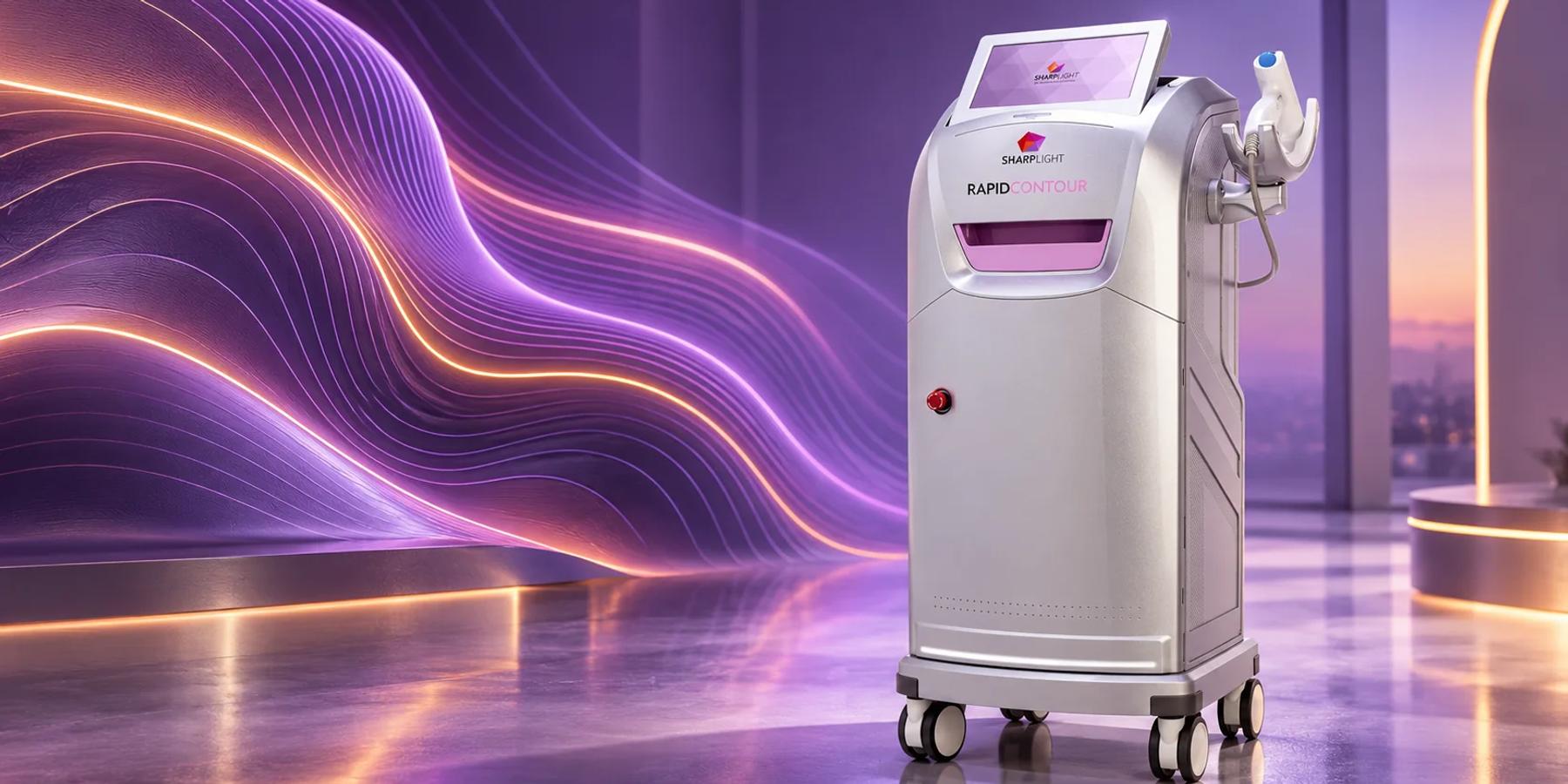
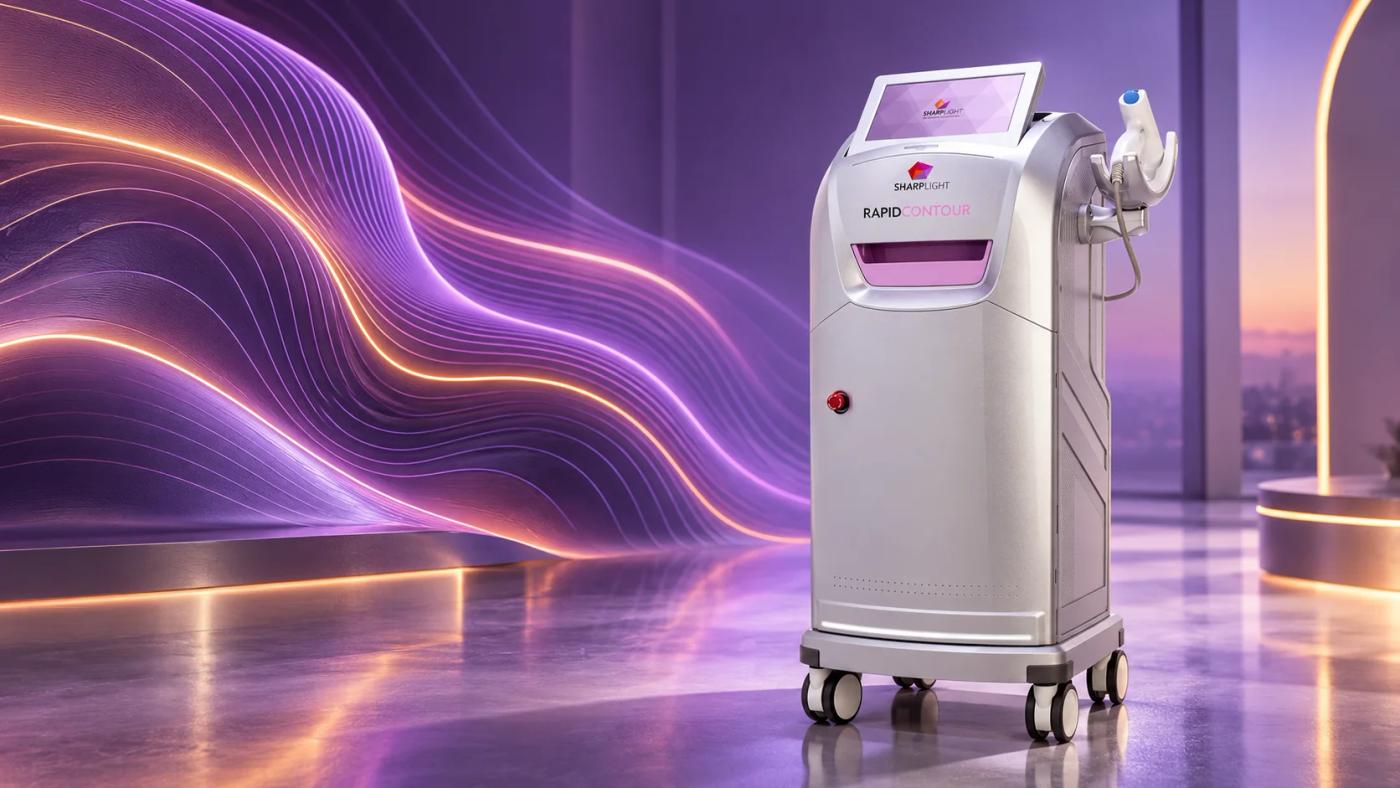
Rapid Contour is SharpLight's dedicated RF workstation for facial and body protocols. Its RF Face handpiece uses bipolar energy, while RF Body uses multipolar energy with 12 mm and 14 mm tip options. The system supplies up to 50 W.
SharpLight describes its applications as including skin-texture and contouring protocols, temporary reduction in cellulite appearance and temporary circumferential reduction. This is the relevant product for this article; Rapid Smooth is a dedicated DPC hair-removal workstation.
Evaluate Rapid Contour against the services your clinic intends to deliver. Its documented workflow combines continuous handpiece movement, impedance monitoring and practitioner skin-temperature checks. Ask for a demonstration covering the intended treatment areas, operator training and patient selection.
The product page describes a possible body-treatment plan of 12 treatments, commonly at weekly intervals, with maintenance directed by the practitioner. This is a platform-specific example, not a universal RF prescription or a promise that every patient needs or benefits from that schedule.
For the broader service context, explore SharpLight's professional body-contouring treatments. A device demonstration should connect the platform's documented capabilities with the clinic's treatment menu, staffing and follow-up process, including how patients will be informed about realistic outcomes.
FAQ
RF Body Contouring FAQ
Does RF body contouring hurt?
External RF commonly feels warm. Rapid Contour treatment is generally well tolerated, but discomfort can occur and varies by person and treatment area. Tell the practitioner about unexpected pain or skin changes during or after treatment.
How soon are results visible?
Changes may develop gradually and some benefits may be temporary. Timing depends on the device, treatment goal and individual response. Agree on a review schedule with the practitioner rather than expecting an immediate or guaranteed result.
Is RF body contouring safe, and is it FDA-cleared?
RF treatments have potential benefits and risks, including thermal injury. Suitability requires screening and trained delivery. FDA clearance and other regulatory authorizations are specific to the device and intended use; ask the provider for current documentation for the exact system and your market.
How many sessions are needed?
The plan depends on the platform, treatment area and patient assessment. SharpLight describes a possible Rapid Contour body series of 12 treatments, commonly at weekly intervals, with maintenance as directed. This is not a universal schedule for all RF systems or patients.
RF vs. fat freezing: which is better?
Neither is universally better. Cryolipolysis targets selected fat bulges through cooling, while RF applications may focus on skin appearance, cellulite or circumference. The choice depends on the device, the treatment goal, individual risks and clinical assessment.
Grow with SharpLight
Ready to bring advanced aesthetic technology to your clinic?
Talk with our team about the right platform, training, financing, and ongoing support for your business.
Book a demo