Best Aesthetic Lasers for Clinics: A Buying Guide by Treatment Category
Compare professional aesthetic lasers and light-based platforms by treatment category, technology, handpieces and clinic fit before choosing your next system.
The Best Aesthetic Lasers for Clinics
The best aesthetic laser depends on the treatments your clinic plans to deliver. This guide compares professional laser, IPL, RF and infrared platforms by hair removal, resurfacing, pigmentation, acne-related care and body contouring.
- No single platform is the right fit for every treatment mix or clinic.
- Multifunction platforms can spread equipment cost across more indications when the clinic will use them.
- Handpiece ecosystem, training and service deserve as much attention as headline specifications.
- Match the platform to your patient base, team and realistic demand—not the brochure alone.
The best aesthetic laser for a clinic is the platform that matches the treatments its team can deliver consistently and its patients are most likely to book. A high-spec device is not automatically the right device if its handpieces, training requirements or service mix do not fit the practice.
Clinic buyers often use “aesthetic laser” as an umbrella term. In practice, professional systems may combine true laser wavelengths with intense pulsed light (IPL), radiofrequency (RF) and infrared technologies. Those modalities work differently, so this guide compares them by treatment category and clinic fit rather than treating every platform as the same kind of laser.
How should a clinic choose an aesthetic laser?
Start with the treatment menu, not the brochure. List the services the clinic expects to book most often, the patient profiles it serves, the space available and the training capacity of the team. Then compare only the platforms that support that plan.
A focused platform can make sense when a clinic wants to build one high-volume service, such as hair removal or resurfacing. A multifunction platform can make sense when several treatment categories will share the same room, team and patient base.
The final choice should also account for approved indications in the clinic’s market, the included handpieces, service access, expected treatment time and realistic demand. No comparison table can replace a product demonstration and a market-specific regulatory review.
Which aesthetic platform is the best fit for hair removal?
Hair-removal clinics commonly compare diode-laser systems with broad-spectrum IPL platforms. The relevant differences include treatment speed, spot size, cooling, skin-type protocols and whether the clinic also wants to offer non-hair applications.
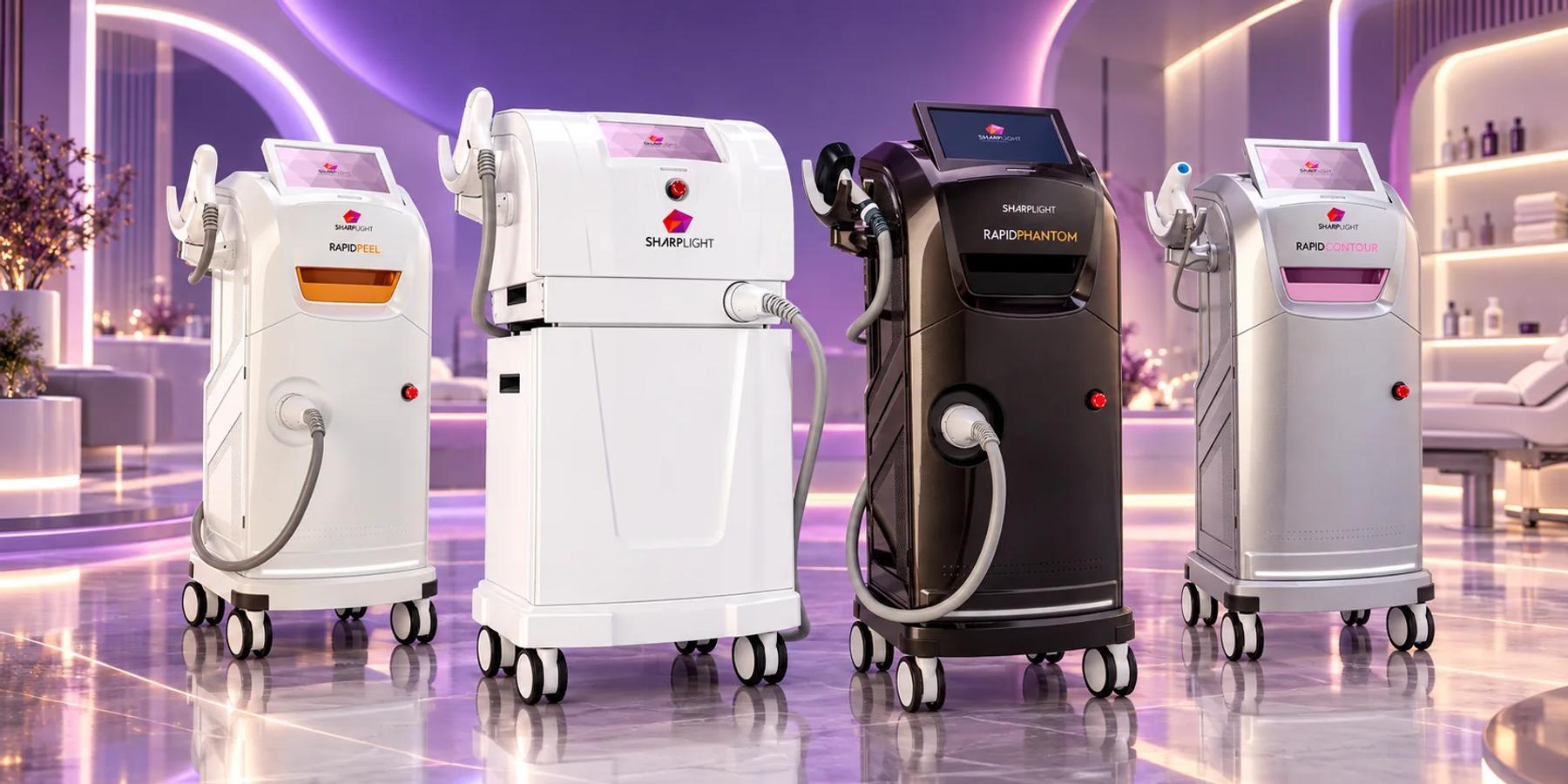
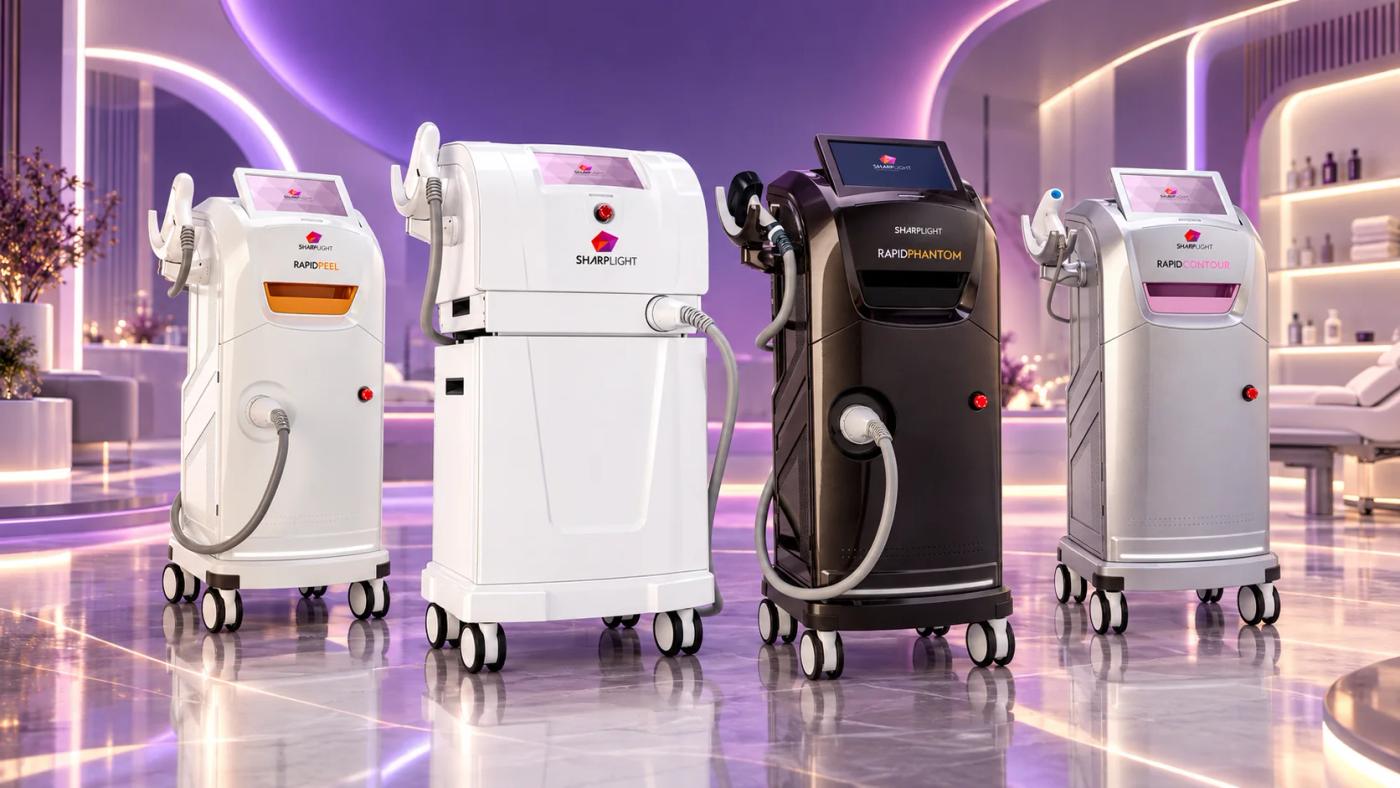
Rapid Phantom: dedicated diode-laser hair removal
Rapid Phantom is an 810 nm diode-laser workstation with GLIDE and EDGE handpieces. Dynamic mode delivers 5–40 J/cm² at 1 Hz, while Flow mode uses 2–10 J/cm² at 5–10 Hz for continuous in-motion coverage.
GLIDE has a 3.0 cm² spot and 1200 W output for larger areas. EDGE has a 1.6 cm² spot and 600 W output for detailed or contoured areas. Both use CoolTip™ sapphire contact cooling, and the platform supports protocols across Fitzpatrick Skin Types I–VI after consultation and skin assessment.
Rapid Smooth: dedicated DPC and FLOW hair reduction
Rapid Smooth is a focused hair-removal workstation using DPC™ and DPC™ FLOW Mode across a 635–950 nm spectrum. Its HR 635 handpiece family offers 3.4 and 6.4 cm² spot sizes, with DPC and FLOW protocols supporting Fitzpatrick Skin Types I–VI when selected appropriately.
Rapid DPC Pro: hair reduction plus additional applications
Rapid DPC Pro is an IPL workstation for clinics that want hair reduction alongside inflammatory-acne, rejuvenation and selected vascular and pigment protocols. The system supports eight compatible handpieces across those application families, with 1.5, 3.4 and 6.4 cm² spot sizes.
For a treatment-focused overview, see SharpLight’s professional hair-removal technology guide.
Which platform is the best fit for skin resurfacing and rejuvenation?
Resurfacing platforms should be compared by energy source, treatment depth, recovery profile and the range of concerns the clinic intends to address. A dedicated resurfacing service and a broad rejuvenation menu may call for different systems.
Rapid Peel: a skin-focused resurfacing platform
Rapid Peel combines a fractional Er:YAG 2940 nm laser with DPC SR580 and Dual VP² handpieces. The laser delivers selectable energy up to 1.4 J, pulse widths from 1–2 ms and repetition rates from 1–3 Hz, with 7×7, 9×9 and 4 mm tip options.
SR580 covers a 580–950 nm band for tone and rejuvenation. Dual VP² uses 535–680 nm and 860–1200 nm bands for selected pigment and vascular spot treatments. This makes Rapid Peel a focused option for clinics building resurfacing and complementary skin services.
OmniMax S4: resurfacing within a broader treatment menu
OmniMax S4 combines DPC™ IPL, radiofrequency, VermaDerm™ infrared and three laser modalities: fractional Er:YAG 2940 nm, long-pulsed Nd:YAG 1064 nm and Q-switched Nd:YAG 1064/532 nm. Its 12 application-specific handpieces support more than 60 clinical indications across four technology families.
For the clinical concepts behind these options, read what skin rejuvenation is and how the treatments work and explore the skin-resurfacing treatment overview.
Which platform fits pigmentation, vascular and acne-related care?
These concerns require accurate assessment before a device or handpiece is selected. A clinic should not treat an atypical lesion without appropriate evaluation, and light-based treatment should sit alongside—not replace—conventional acne care when that care is indicated.
Rapid DPC Pro organizes its handpiece ecosystem around hair reduction, skin rejuvenation, selected vascular and pigmented lesions, and inflammatory acne. Rapid Peel adds fractional Er:YAG resurfacing to SR580 and Dual VP² options. OmniMax S4 brings those types of applications into a larger four-technology workstation for clinics that also need laser, RF and infrared capabilities.
The right choice depends on whether the clinic needs a focused IPL workflow, a resurfacing-centred platform or a broader workstation spanning several treatment categories.
Which platform is the best fit for body contouring?
Body-contouring systems should be evaluated separately from laser and IPL platforms because radiofrequency uses electrical energy rather than light. Clinics should compare the treatment target, handpiece geometry, session workflow and whether face and body protocols are both required.
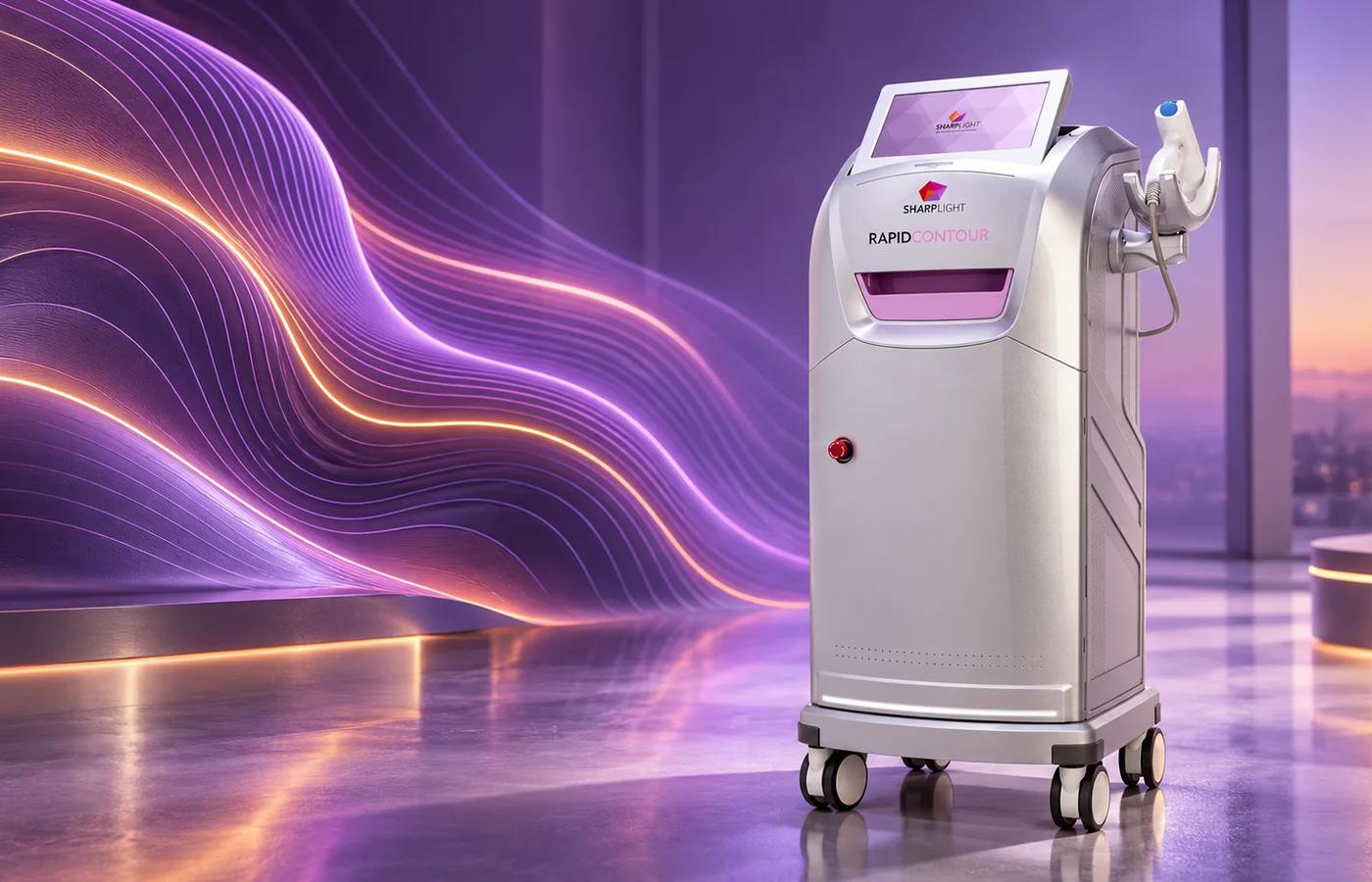
Rapid Contour: dedicated face and body RF
Rapid Contour is a dedicated radiofrequency workstation with a bi-polar RF Face handpiece and a multi-polar RF Body handpiece. It supplies up to 50 W, uses continuous-motion protocols and includes 12 mm and 14 mm RF Body tip options in a 35 kg mobile workstation.
OmniMax S3 and S4: contouring inside a multifunction platform
OmniMax S3 combines DPC™ IPL, VermaDerm™ infrared and bi-polar/multi-polar RF across nine handpieces. OmniMax S4 adds a laser family to its DPC, RF and infrared technologies. Clinics comparing dedicated and multifunction approaches can also use the professional body-contouring machine guide.
How do SharpLight aesthetic platforms compare?
| Platform | Technologies | Primary applications | Best fit for |
|---|---|---|---|
| OmniMax S4 | DPC™ IPL · RF · VermaDerm™ IR · Er:YAG 2940 · LP Nd:YAG 1064 · QS Nd:YAG 1064/532 | 60+ indications across 12 handpieces | Clinics wanting one platform across multiple treatment categories |
| OmniMax S3 | DPC™ IPL · VermaDerm™ IR 850–1750 nm · RF up to 50 W | Hair reduction, rejuvenation, selected vascular/pigment concerns, tightening and contouring | Multifunction capability without the S4 laser family |
| Rapid DPC Pro | DPC™ and FLOW IPL | Hair reduction, inflammatory acne, rejuvenation, selected vascular and pigment protocols | A broad IPL treatment menu |
| Rapid Phantom | 810 nm diode laser | Hair removal and hair reduction | Dedicated diode-laser hair-removal clinics |
| Rapid Smooth | DPC™ and FLOW · 635–950 nm | Hair removal and hair reduction | Dedicated broad-spectrum hair-removal clinics |
| Rapid Peel | Er:YAG 2940 nm · DPC SR580 · Dual VP² | Resurfacing, rejuvenation and selected pigment/vascular concerns | A resurfacing-focused skin service |
| Rapid Contour | Bi-polar face RF · multi-polar body RF up to 50 W | Facial sculpting, body contouring and skin-texture protocols | A dedicated face-and-body RF service |
To review the complete current lineup, compare all SharpLight products.
What happened to Formax and Formax+?
Formax and Formax+ are legacy SharpLight systems referenced by the original version of this article. They no longer appear in the current product lineup. Clinics researching an existing Formax system can speak with a SharpLight representative about service questions and the current platforms that most closely fit their treatment menu.
What should a clinic evaluate before buying?
Regulatory status and approved indications
Authorization is specific to the device, indication and country. Ask for current documentation covering the exact platform, handpieces and intended uses in your market rather than relying on a general product-family claim.
Handpieces and installed configuration
Handpieces determine what a platform can actually deliver. Confirm which applicators are included, which are optional, their treatment geometries and whether future additions require hardware, software or training changes.
Training, clinical support and service
Ask what training is included, how competency is documented, who provides clinical support and how quickly local service is available. A broad platform only creates value when the team can use its relevant applications confidently and consistently.
Utilization and return per treatment
Model expected patient volume, treatment time, pricing, consumables, maintenance and financing before comparing purchase price. A multifunction platform can spread equipment cost across more indications, but a focused platform may be the stronger choice when one service accounts for most expected demand.
Treat every projection as a planning scenario rather than a promise. The most useful demonstration is one built around the clinic’s intended treatments, team and patient mix.
FAQ
Frequently asked questions
What is the best aesthetic laser for a new clinic?
It depends on the clinic’s launch menu, patient base and training capacity. A focused platform can make sense for one high-volume service, while a multifunction platform may suit a clinic planning several complementary treatments. Compare the installed handpieces and local indications before deciding.
What is the difference between IPL and laser?
A laser produces target-specific monochromatic light at a defined wavelength. IPL delivers filtered broadband light across a wavelength range. Both can support professional aesthetic treatments, but they use different energy-delivery approaches and require application-specific protocols.
How much does a professional aesthetic laser cost?
Pricing varies by platform, installed handpieces, training, service coverage and financing. SharpLight does not publish one universal price because configurations differ. Clinics should request a quote that identifies the equipment, support and ownership costs included.
Which laser is best for skin resurfacing?
The right resurfacing platform depends on treatment depth, downtime, patient needs and the clinic’s wider menu. Rapid Peel and OmniMax S4 both include fractional Er:YAG 2940 nm technology, but Rapid Peel is skin-focused while OmniMax S4 spans several technology families.
Are multifunction aesthetic platforms worth it?
They can reduce the space and equipment needed to offer several treatment categories, and they can spread ownership cost across more indications. They may also provide more capability than a focused practice will use. The answer depends on utilization, training and the clinic’s growth plan.
Grow with SharpLight
Ready to bring advanced aesthetic technology to your clinic?
Talk with our team about the right platform, training, financing, and ongoing support for your business.
Book a Professional Demo