Laser Skin Tightening Machines: A Buyer's Guide (2026)
Compare laser, RF, infrared and ultrasound systems, explore tightening and resurfacing capabilities, and assess equipment costs before buying for your clinic.
Laser Skin Tightening Machines, Compared
Choose a skin tightening machine by its intended treatments, patient suitability and operating requirements. Laser, RF, non-laser infrared and ultrasound are different technologies. Compare the exact handpieces, resurfacing capabilities, training and ownership costs before buying; neither the technology label nor the purchase price tells the whole story.
- Separate non-ablative tightening, laser resurfacing and non-laser technologies.
- OmniMax S4 supports distinct tightening and resurfacing applications through different handpieces.
- Compare complete configurations, training and service terms before price.
- Use realistic appointment demand and total operating costs to assess the investment.
A laser skin tightening machine uses controlled light energy to heat tissue and support collagen remodeling. For clinic buyers, the important distinction is whether a system delivers non-ablative heating, laser resurfacing, or a different technology such as radiofrequency or non-laser infrared.
Buy for the treatment you intend to deliver, not the label on the brochure. A machine suited to texture and wrinkles may serve a different purpose from one selected for skin laxity. Start with your patient mix, then compare the exact platform and handpieces.
How does laser skin tightening work?
Selected lasers heat tissue to stimulate a repair response associated with collagen remodeling. The effect depends on wavelength, delivery method, settings and the tissue being targeted. A wavelength alone does not establish that a device is appropriate for tightening.
Non-ablative treatment aims to heat tissue without removing the surface. Ablative resurfacing deliberately removes tissue; fractional delivery treats a pattern of small areas. These approaches have different recovery requirements and should not share one generic promise of no downtime.
The American Academy of Dermatology's skin-tightening overview distinguishes gradual, generally modest non-invasive tightening from resurfacing procedures with more recovery and possible complications. Neither should be presented as equivalent to a surgical lift.
An immediate change is not the same as a lasting result. Ask how the proposed device's outcomes are assessed, when photographs are taken and what follow-up is recommended. Avoid promising a fixed improvement or timetable across all systems.
How do laser, RF, infrared and ultrasound machines compare?
Not every light-based tightening treatment is a laser treatment. Non-laser infrared uses a broader spectrum; RF uses electrical energy; ultrasound uses acoustic energy. The differences matter when comparing equipment, training and patient expectations.
| Technology | How energy is delivered | Buying consideration | Recovery discussion |
|---|---|---|---|
| Non-ablative laser | Light heats selected tissue without intended surface removal | Confirm the specific tightening indication and skin-type suitability | Protocol-dependent; do not promise no reaction |
| Fractional ablative laser | Patterned tissue removal for resurfacing | Assess texture and wrinkle applications, training and aftercare | Plan for healing and device-specific aftercare |
| Non-laser infrared | Broad-spectrum infrared provides thermal delivery | Check the handpiece, intended area and cooling | Use the specific protocol to explain recovery |
| External RF | Electrical energy produces tissue heating | Evaluate electrode design, controls and indications | Distinguish external treatment from invasive RF |
| Focused ultrasound | Acoustic energy is focused at selected tissue depths | Check applicators, intended areas and treatment planning | Discuss device-specific discomfort and recovery |
This table is a starting point for equipment discussions, not a ranking of safety or effectiveness. Treatment depth and comfort cannot be reliably ordered by category alone. Ask for evidence and instructions for the exact device, applicator and intended use.
Compare like with like. External RF should not be treated as interchangeable with RF microneedling, and non-ablative laser treatment should not inherit the recovery claims of fractional ablative resurfacing. Our RF body-contouring guide explains external RF in more detail.
What should clinics check before buying a skin tightening machine?
Start with indications and patients
Write down the concerns you intend to treat: laxity, wrinkles, texture or a combination. Identify the areas, skin types and recovery expectations common in your clinic. Use that list to assess suitability rather than assuming a device covers every service described as rejuvenation.
Ask for current regulatory documentation for your market and the intended applications. Request the exact model and handpiece configuration in writing. A claim about a technology family is not a substitute for documentation covering the equipment you will receive.
Compare the complete configuration
Check which applicators are included and which cost extra. Ask what each one does, how it is maintained and whether upgrades need additional training. A platform's advertised capabilities may exceed those of the configuration in your quote.
Cooling and other controls also vary between handpieces. Have the supplier demonstrate the workflow for your intended services, including patient preparation, protective equipment, treatment delivery and cleanup. Time the entire appointment rather than the energy-delivery portion alone.
Plan training and service before installation
Ask who trains new staff, what practical assessment is included and how protocol questions are handled later. Request written service terms covering preventive maintenance, repair turnaround, replacement equipment and handpiece support.
A usable treatment menu needs trained operators and dependable service. More optional handpieces do not automatically produce more revenue. Choose capabilities your team can deliver competently and your patients are likely to use.
Can a laser skin resurfacing machine also support tightening?
A multi-technology platform can support both services through different handpieces. That is different from saying that every resurfacing laser performs every tightening procedure.
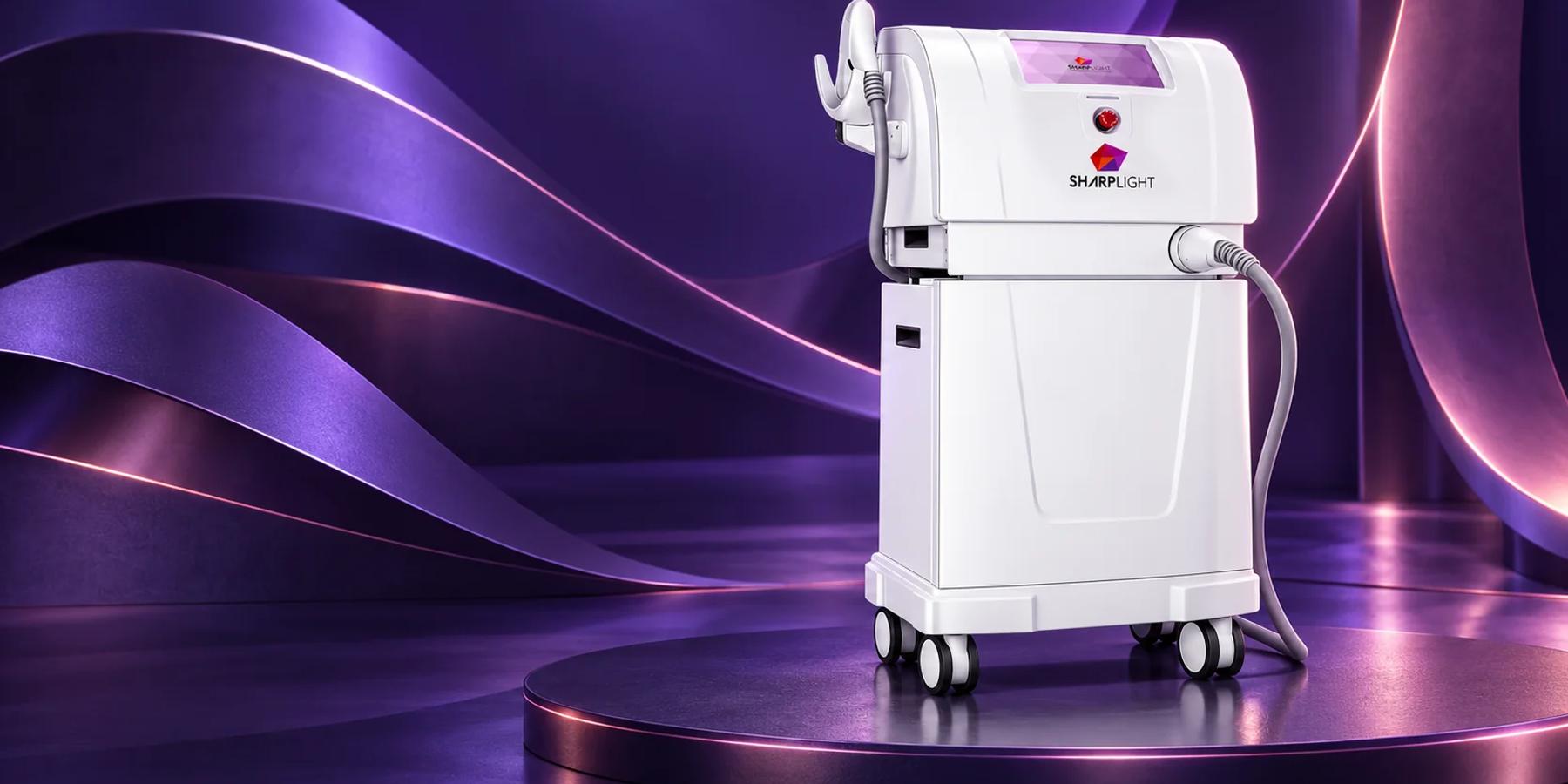
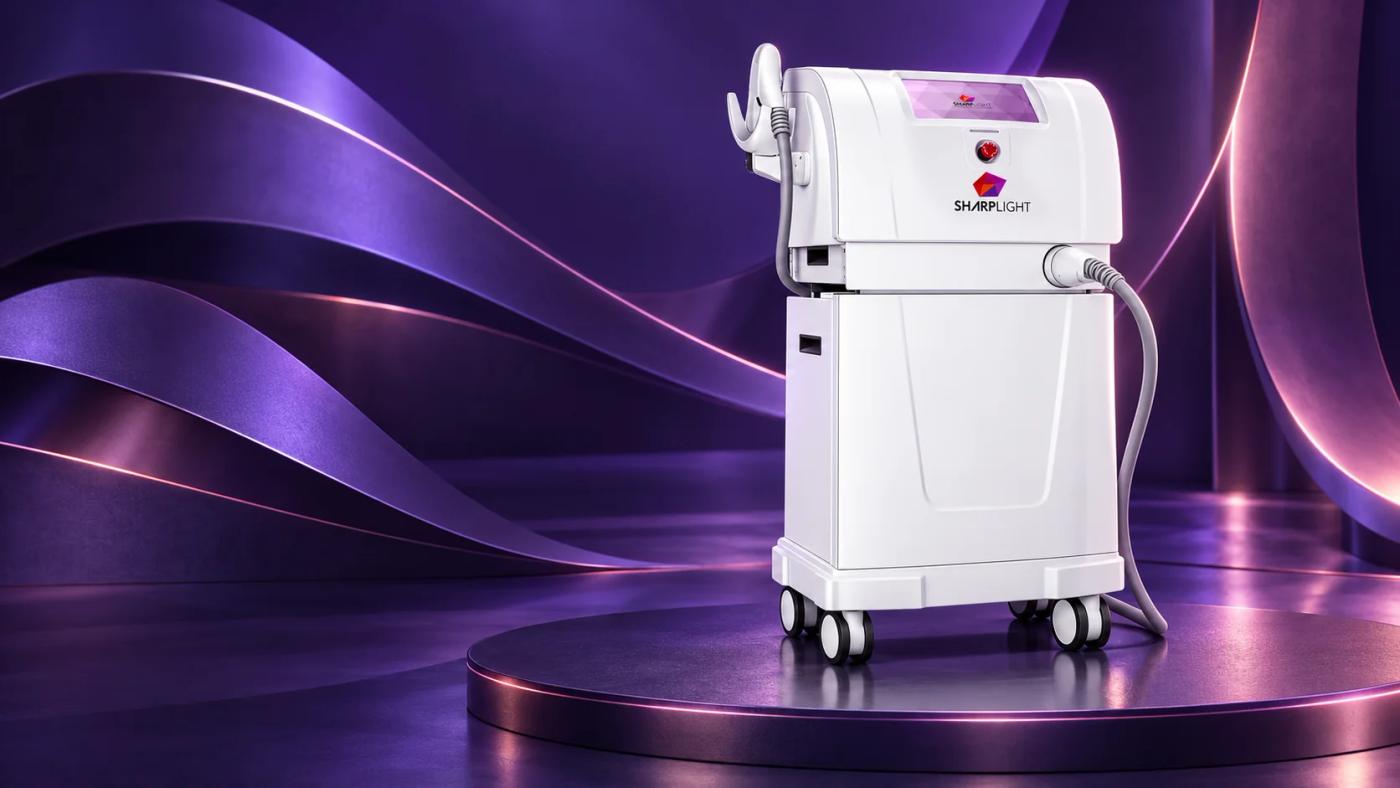
SharpLight's OmniMax S4 combines DPC intense pulsed light, RF, VermaDerm infrared and laser technologies. Its RF Face handpiece lists facial tightening among its applications. VermaDerm IR handpieces support skin-laxity protocols using long-pulsed infrared energy.
For resurfacing, the S4 offers a fractional Er:YAG 2940 nm laser with applications including wrinkles, scars and skin resurfacing. Those capabilities belong to the resurfacing handpiece; they should not be attributed to its RF or infrared applicators.
One platform can offer complementary services without making them the same treatment. Review SharpLight's fractional skin-resurfacing treatments alongside the S4 configuration. Ask which handpieces your quote includes and what training accompanies each.
For a broader equipment shortlist, see the best aesthetic lasers for clinics. Use the same comparison process across suppliers: indication, evidence, configuration, workflow and support.
How do face and body tightening use cases differ?
Facial treatment planning may involve smaller areas and overlapping concerns such as wrinkles, texture and laxity. Ask which facial areas the device supports, what eye protection is required and how the practitioner assesses suitability.
Body services often involve larger treatment areas, making applicator coverage and appointment length important. Skin laxity and localized fullness are separate concerns; a tightening service should not automatically be described as fat reduction.
Both face and body treatments require careful patient selection and technique. Marketing terms such as “face tightening machine” or “collagen machine” do not identify a specific mechanism or establish suitability for an area.
A demonstration should match the services you actually plan to offer. For body-focused equipment decisions, our professional body-contouring machine buyer's guide adds context on treatment goals and ownership considerations.
What does a skin tightening machine cost?
There is no useful single price for this whole category. A dedicated system, a multi-technology platform and a used machine with limited support are different purchases. Compare written quotes for equivalent configurations, currency, warranty and training before judging value.
Ask for an itemized total, not just a headline equipment price. Include installation, applicators, consumables, maintenance, software fees where applicable, financing and taxes. Confirm what happens financially if a handpiece needs replacement or the device is unavailable for service.
Client treatment prices are a separate question. They depend on the service, area, appointment length and local market. Our skin-rejuvenation treatment cost guide provides patient-facing context; treatment charges should not be mistaken for device purchase prices or profit.
Build a realistic utilization model
Estimate collected revenue per completed appointment, then subtract the variable costs of delivering it, including staff time and consumables. Model monthly appointment volume using your existing demand and capacity rather than the machine's theoretical maximum throughput.
For a simplified equipment-recovery estimate, divide the upfront equipment investment by the contribution per treatment. This calculation alone excludes fixed overhead, financing costs and taxes, so it is not a complete profit forecast. Keep cash-flow planning separate when evaluating financed equipment.
Run conservative, expected and busy-month scenarios. Include cancellations, introductory discounts, maintenance time and the ramp-up period for training. Do not count the same treatment room or practitioner as fully available for several services simultaneously.
Choose a machine your clinic can support at realistic demand. The final demonstration should resolve clinical fit, configuration and operating costs. A sound purchase decision connects those details to a treatment menu your team can deliver consistently.
FAQ
Laser Skin Tightening Machine FAQ
Do laser skin tightening machines really work?
Selected laser treatments can improve the appearance of skin laxity, but outcomes depend on the device, treatment plan and individual patient. Improvement may be gradual and modest. A professional assessment should establish whether the concern is suitable for treatment and how progress will be reviewed.
Laser vs. RF skin tightening: which is better?
Neither is universally better. Laser and RF deliver different forms of energy, and individual systems have different intended uses. Compare the exact device, treatment goal, skin-type suitability, recovery requirements and practitioner experience rather than assuming one category always performs better.
How much does a skin tightening machine cost?
Request an itemized quote for the exact configuration. Purchase price alone does not include every potential cost: handpieces, training, maintenance, consumables, financing and taxes can affect the total. Compare new and used equipment separately and confirm warranty and service coverage.
How many sessions do clients need?
There is no single session count across laser, RF, infrared and ultrasound systems. The practitioner should use the device-specific protocol and patient assessment to propose a course, review progress and explain any maintenance needs. Ask for the expected total commitment before starting.
Is laser skin tightening safe for the face?
Suitability depends on the device, treatment area, skin type and medical assessment. Trained delivery, appropriate protective measures and aftercare matter. Treatments are not risk-free, and resurfacing has different recovery needs from non-ablative procedures. Discuss potential adverse effects and alternatives with a qualified practitioner.
Grow with SharpLight
Ready to bring advanced aesthetic technology to your clinic?
Talk with our team about the right platform, training, financing, and ongoing support for your business.
Book a Professional Demo