Which Skin Rejuvenation Treatment Is Right for You?
Compare IPL, fractional resurfacing, external RF and carbon facials by skin concern, recovery and consultation needs, with a practical decision table.
The short version
The right skin rejuvenation treatment depends on the concern, skin history and recovery you can manage. IPL, fractional resurfacing, external RF and carbon facials serve different purposes. Use this guide to prepare for a consultation, not to prescribe yourself a procedure or a fixed treatment package.
- Match the treatment to the concern before choosing a device.
- Pigment, vessels, scars and laxity are different targets.
- Fractional resurfacing requires individualized recovery planning.
- Session counts and skin suitability depend on the exact procedure.
- Ask about the full course, risks, aftercare and review point.
The right skin rejuvenation treatment depends on the concern, your skin and the recovery you can realistically manage. Pigment, visible vessels, uneven texture and looseness are different targets. Start with the comparison below, then bring your priorities to a qualified provider.
This guide focuses on professional IPL, fractional Er:YAG, external radiofrequency and carbon facial treatments. It is a shortlist for discussion, not a diagnosis or a complete list of dermatology options. For the underlying concepts, see what skin rejuvenation is and how it works.
Match the concern to a treatment discussion
| Concern | Technology to discuss | Recovery considerations | Course planning |
|---|---|---|---|
| Fine lines / wrinkles | Fractional resurfacing; external RF if laxity contributes | Resurfacing needs healing; external RF generally has less downtime | Depends on procedure and intended change |
| Acne scars / uneven texture | Fractional resurfacing after scar assessment | Allow for healing and visible reactions | Scar type and response determine the plan |
| Selected sunspots / pigmentation | IPL with appropriate assessment | Redness or pigment changes may occur | A series may be proposed; review response |
| Visible vessels / rosacea-related redness | IPL or an appropriate vascular laser | Protocol-specific reactions and recovery | Assess redness within the wider medical plan |
| Mild skin laxity | External RF tightening | Often limited downtime; temporary reactions possible | Device-specific course and review timing |
| Dullness / pore appearance | Carbon facial; superficial exfoliation where appropriate | Usually shorter recovery than ablative resurfacing | Assess need for repeat visits individually |
The course column deliberately avoids fixed packages. A number attached to “skin rejuvenation” means little without the exact procedure, settings and goal. Ask why the proposed number of visits is appropriate for you and when the plan will be reviewed.
If several rows apply, choose the concern that matters most first. For example, someone bothered by brown spots and depressed acne scars should ask which part of the proposed plan addresses colour and which addresses texture. One improvement does not automatically deliver the other.
IPL and DPC can address selected pigment and visible vessels
IPL is a light treatment, not a laser. It delivers a range of wavelengths, usually filtered for particular targets. Light absorbed by pigment or blood-vessel targets becomes heat. DermNet’s IPL overview describes its use for selected pigmented and vascular concerns.
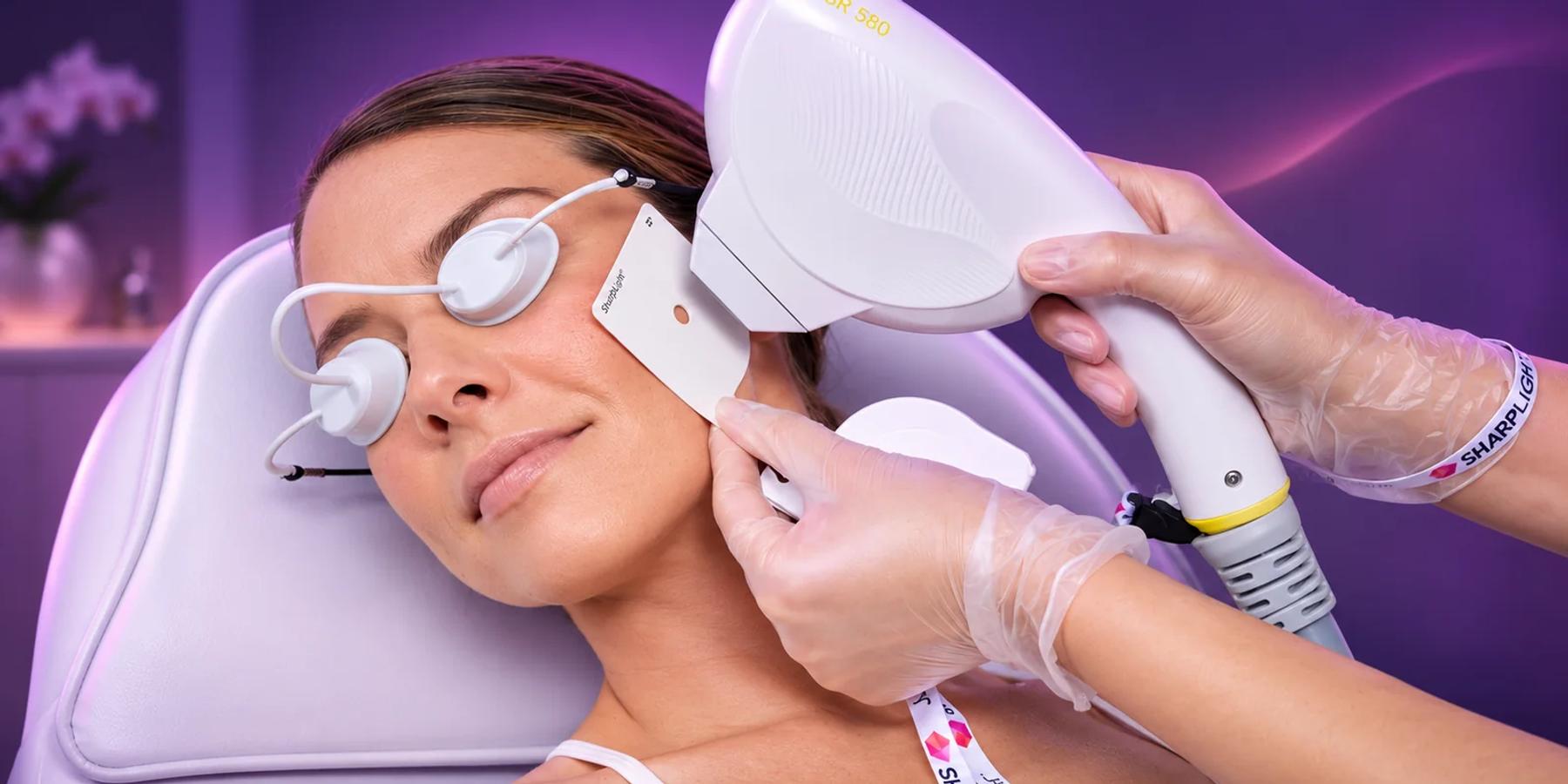
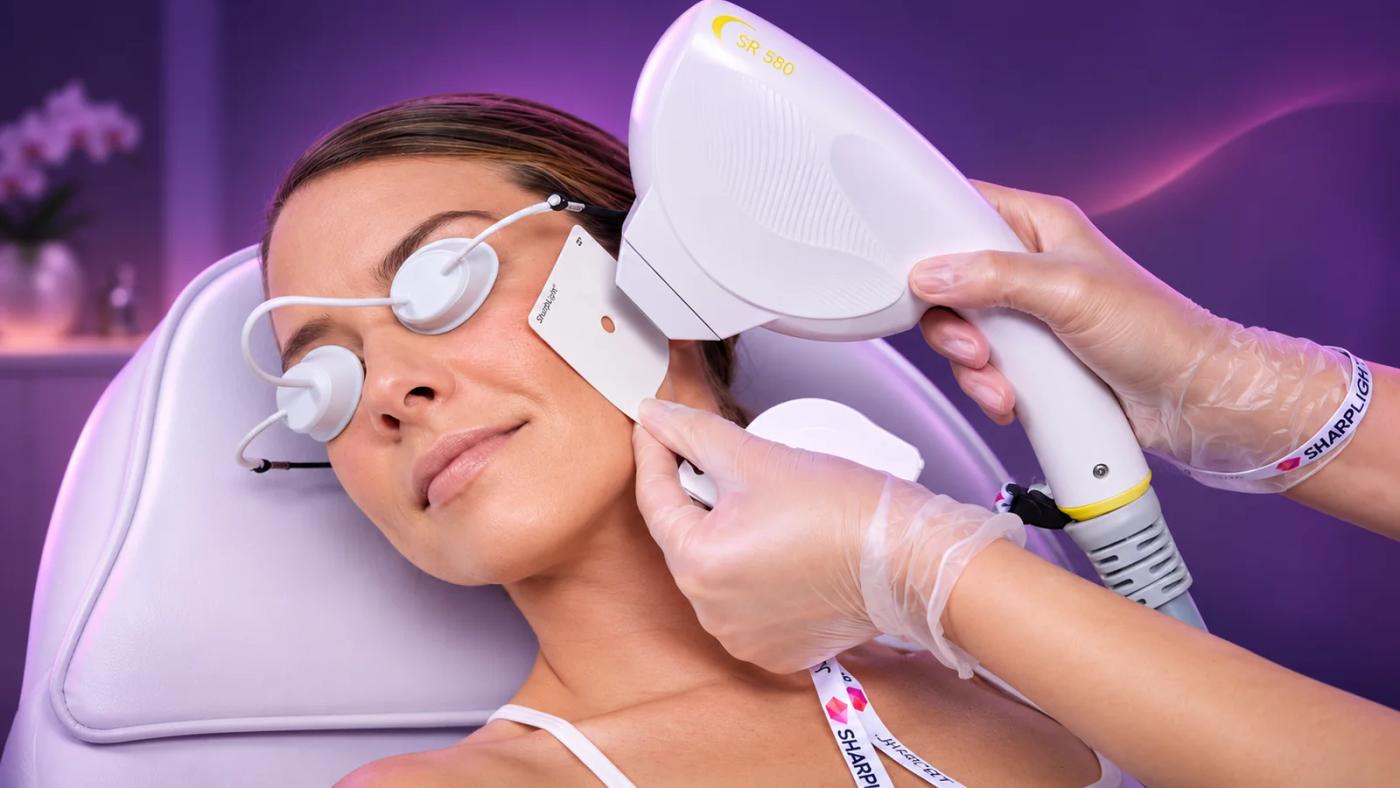
SharpLight’s DPC is its Dynamic Pulse Control IPL technology. The available handpiece and protocol matter; the brand name alone does not establish suitability. Ask what the provider intends to target and why that configuration fits your skin.
IPL is worth discussing for selected sunspots or visible facial vessels. It is not a direct substitute for scar resurfacing or a surgical lift. Our pigmented-lesion treatment page provides further context for the pigment side of the decision.
Recovery is often limited, but redness, swelling, discomfort and pigment changes can occur. Burns or blistering are possible complications. Low downtime does not mean the surrounding skin cannot be injured.
If redness is your concern, ask whether it is rosacea or another condition before choosing a cosmetic procedure. The American Academy of Dermatology’s rosacea guidance explains the role of lasers and lights in treating visible vessels and redness. Other symptoms may need a broader medical plan.
Fractional Er:YAG resurfacing targets texture rather than every sign of ageing
Ablative fractional resurfacing is a different commitment from a light facial. Er:YAG at 2940 nm is strongly absorbed by water in tissue. Fractional delivery treats separated zones, leaving intervening tissue untreated, rather than treating a continuous surface.
This approach may be discussed for selected fine lines, texture irregularities and scars. Scar type matters: “acne marks” can describe colour changes or actual depressions, and those need different assessments. Ask your provider to identify which finding they expect to improve.
Mayo Clinic’s resurfacing guidance distinguishes ablative from non-ablative treatment and describes recovery and risks. Redness, swelling, infection, pigment changes and scarring belong in the consultation. Fractional does not automatically mean mild or downtime-free.
Plan for healing and clear aftercare instructions. Ask separately about returning to work, resuming products and exercise, and how long visible redness might last. These are different questions, even when a clinic gives one headline recovery estimate.
See our skin resurfacing overview for the treatment category. The OmniMax S4 resurfacing spotlight explains one SharpLight platform’s fractional Er:YAG capability; it is not a claim that every SharpLight system offers that modality.
External RF is an option to discuss for modest skin laxity
Radiofrequency tightening aims to improve firmness; it does not reproduce a facelift. External RF applies energy through the skin surface to heat underlying tissue. The AAD’s skin-tightening guide describes gradual change and the limits of nonsurgical approaches.
This section concerns non-invasive external RF. RF microneedling and procedures using inserted probes are different interventions, with different recovery and risk profiles. Ask which type you are being offered before comparing reviews or packages.
A small amount of looseness may justify a discussion about external RF. Significant sagging needs a realistic conversation about alternatives. Do not choose a treatment on the assumption that more sessions will eventually produce a surgical result.
External RF often involves limited downtime, although temporary redness or swelling can occur. Ask how discomfort is monitored and what response the provider expects. Our facial tightening page introduces the service; an assessment determines whether it fits your goal.
Carbon facials focus on surface-appearance goals
A carbon facial and fractional resurfacing are not interchangeable. SharpLight’s carbon facial protocol combines a topical carbon layer with Q-switched Nd:YAG laser energy. It is positioned around concerns such as surface texture and pore appearance.
A shorter recovery expectation may appeal to someone seeking a facial refresh. That does not establish that the procedure will achieve the same endpoint as ablative treatment of an established scar. Nor does a refresh permanently eliminate pores.
Ask what improvement is realistic for the particular concern, how response will be assessed and whether further visits have a clear purpose. Do not assume a series is necessary solely because it is sold as a package.
Tell the provider about previous reactions and current skincare before treatment. Ask what temporary changes to expect, what aftercare is needed and whom to contact if your response differs. “Quick recovery” should still come with a specific plan.
Microdermabrasion remains a reasonable superficial option
Microdermabrasion gently exfoliates the skin surface. The AAD’s microdermabrasion overview describes potential improvement in dullness, uneven tone and superficial texture, including use across skin colours.
It does not perform the same job as a treatment aimed at vessels, deeper scars or laxity. That is a difference in purpose, not a reason to dismiss it. A superficial concern may not require an energy-based procedure at all.
The AAD’s recovery guidance notes that temporary redness or swelling can occur despite the lack of a usual recovery period. Routine blistering and repeated wound-dressing changes are not appropriate expectations for standard microdermabrasion.
Skin tone and treatment history change the decision
Ask for a plan based on your skin, not an assurance that a machine suits everyone. Skin tone, recent tanning, previous pigment changes, medications and healing history are relevant. Darker skin can carry a higher risk of colour changes with some procedures, but excluding every light or laser option is also an oversimplification.
A provider should explain experience with patients whose skin resembles yours, the exact technology proposed and how risks are managed. A Fitzpatrick classification can inform assessment; it cannot replace the rest of the history or the device-specific instructions.
Useful questions include:
- What makes this procedure appropriate for my concern and skin?
- What complications have you discussed with patients like me?
- Is a test area appropriate, and what can it tell us?
- What would make you postpone treatment or recommend another option?
ARPANSA’s consumer guidance recommends discussing medical history, medicines, risks and provider experience before light-based procedures. A test area does not guarantee that a full treatment will be complication-free.
A new or changing spot should be assessed medically rather than assumed to be a cosmetic sunspot. The first decision may be diagnosis, not a choice between treatment packages.
Compare the full plan, not just the first appointment
A useful quote tells you what you are buying and when the result will be reviewed. Request the proposed procedure, treatment area, estimated course, follow-up arrangements and any expected maintenance. Ask what happens if the response is less than expected.
There is no defensible universal “three to six sessions” rule across these technologies. A plan may involve one treatment, repeated treatments or a staged approach. The provider should explain the reasoning instead of transferring a number from an unrelated procedure.
For budgeting, distinguish the price per visit from the likely total commitment. Our skin rejuvenation cost guide explains the factors to compare. Include aftercare products and review appointments where these carry additional charges.
Think about timing too. A treatment that technically permits a return to work may still leave visible changes you would prefer not to have before an event. Ask for advice based on your actual calendar rather than choosing the shortest advertised recovery time.
Agree on how progress will be recorded. Consistent photographs, the same lighting and a defined review point make the conversation more useful than relying on memory or a filtered social image. Ask what improvement would count as a worthwhile outcome for your priority concern.
Bring four priorities to your consultation
You do not need to choose the machine before meeting the provider. Bring enough information to make the recommendation specific:
- Your main concern: point out the change you want assessed, rather than asking for a general “glow.”
- Your skin and treatment history: include medicines, skincare, recent sun exposure and previous procedures or reactions.
- Your recovery limits: explain work commitments, upcoming events and the aftercare you can follow.
- Your budget and availability: discuss the whole course and follow-up, not only the first session.
If a combined plan is suggested, ask what each component contributes and why the proposed order and interval make sense. Multiple technologies are not automatically better, and sharing a platform does not prove that procedures should be performed together.
Our skin laser facial comparison can help you decode treatment names. Clinic owners comparing equipment can use the separate aesthetic laser buying guide. For patients, the next step is to explore skin rejuvenation options and discuss suitability with a qualified professional.
This article is educational, not a diagnosis or treatment prescription. Individual assessment and the applicable device instructions determine suitability, risks and protocols.
FAQ
Choosing a skin rejuvenation system FAQ
What is the best skin rejuvenation treatment for wrinkles versus acne scars?
The right option depends on the finding. Fractional resurfacing may address selected fine lines and scars, while external RF may be discussed when looseness contributes. Acne marks and depressed scars are different concerns; assessment should guide the choice.
Is laser skin rejuvenation safe for darker skin types?
Suitability is procedure-specific. Some treatments carry a greater pigment-change risk in darker skin. Ask a qualified provider about the proposed device, relevant experience, your history and applicable instructions rather than relying on a blanket skin-type claim.
How many sessions does skin rejuvenation take?
There is no single number across IPL, resurfacing, external RF and carbon facials. Ask for an individualized course, review point and explanation of whether repeat or maintenance visits are expected.
Which treatment has the least downtime?
Superficial treatments and external RF often have less recovery than ablative resurfacing, but temporary reactions can still occur. Compare the exact protocol and ask separately about healing, visible changes and returning to activities.
Can different rejuvenation technologies be combined?
A qualified provider may recommend a staged plan when different concerns need different approaches. The order, spacing and suitability must follow assessment and the applicable protocols; multiple treatments are not automatically necessary or appropriate.
Your next step
Find the right treatment for your skin
Explore the treatment options, then discuss your concerns and suitability with a qualified provider.
Explore skin rejuvenation