How to Open a Tattoo Removal Clinic in Canada: 2026 Startup Guide
A practical guide to opening a tattoo removal clinic in Canada, covering startup planning, laser-platform selection, regulatory checks, utilization and break-even modelling.

TL;DR — Quick answer
Opening a tattoo removal clinic in Canada is feasible with realistic expectations: startup costs are driven primarily by the laser platform, revenue depends on session volume and utilization, and regulatory requirements vary by province. This guide explains the 2026 startup plan, equipment choices and break-even method.
- The laser platform is the largest equipment decision—compare the complete system, not brand hype.
- Provincial, local, professional and insurer requirements must be verified before committing capital.
- Break-even depends on completed sessions and contribution margin, not brochure pricing.
- Existing aesthetic clinics may be able to test tattoo removal with less new overhead than a standalone clinic.
Last updated: October 2026
Opening a tattoo removal clinic in Canada can be viable, but there is no responsible Canada-wide startup figure. The real cost is the sum of the laser platform, facility, insurance, training, launch expenses and working capital. Build the plan from current written quotes, then test it against conservative session volume. An established aesthetic clinic may be able to add tattoo removal with less new overhead than a standalone operator.
What does it cost to open a tattoo removal clinic in Canada?
Start with the operating model. A dedicated clinic must fund a location, build-out and most operating systems from zero. An existing clinic may already have suitable space, staff, booking software and an established patient base, but it still needs appropriate equipment, training, insurance and safety controls.
Because platform configurations, financing, commercial leases and insurance vary substantially, a single national range can create false confidence. Use this worksheet to collect comparable written quotes before committing capital.
| Cost category | Include in the budget | Validate before committing |
|---|---|---|
| Laser platform | Device, approved configuration, delivery, installation and taxes | Health Canada status, intended use, warranty, service response and financing terms |
| Treatment space | Deposit, leasehold work, electrical needs, controlled-area measures and furnishings | Landlord approval, municipal requirements and a site assessment |
| Safety and training | Operator education, eyewear, signage, protocols and any required safety controls | Manufacturer training, insurer conditions and jurisdiction-specific requirements |
| Insurance and professional support | Commercial coverage, professional liability and legal or accounting advice | Written confirmation that the proposed services and operators are covered |
| Launch and operations | Booking software, website, local marketing, consumables and payment processing | Monthly fixed costs and the cost of acquiring a qualified consultation |
| Working capital | Payroll, rent, debt service and operating costs during the ramp-up period | A conservative reserve based on the clinic’s own monthly cash requirements |
Do not treat the laser quote as the full startup cost. The overlooked line is usually working capital: consultations and treatment series build over time, while rent, payroll and financing begin immediately. If you are comparing several service lines, our skin-rejuvenation treatment cost guide shows how modality and treatment planning influence patient-facing pricing.
Steps to open a tattoo removal clinic in Canada
- Choose the business model. Decide whether tattoo removal will be the clinic’s core service or an addition to an existing aesthetic menu.
- Verify the rules that apply to the exact location and operator. Check federal device requirements, provincial or territorial rules, municipal requirements, professional scope and insurer conditions.
- Build a quote-based capital plan. Obtain written quotes for the platform, premises, insurance, training, launch and working-capital reserve.
- Compare equipment by intended use and support. Review wavelengths, pulse delivery, training, service, warranty and the treatments the approved configuration supports.
- Model conservative utilization. Estimate completed sessions—not theoretical appointment capacity—and include cancellations, seasonality and ramp-up time.
- Prepare operating and safety protocols. Document consultation, test treatment where appropriate, eye protection, controlled access, aftercare, incident response and maintenance procedures.
- Launch with measurable lead sources. Track consultations, bookings, treatment-plan acceptance, repeat visits and contribution margin by channel.
- Review the numbers before expanding. Add staff, space or modalities only when demand and cash flow support the next commitment.
Which laser classes matter for tattoo removal?
Tattoo ink is deposited in the dermis. A tattoo-removal laser delivers short pulses at wavelengths selected for the pigment and patient profile. Rapid energy absorption creates photoacoustic and localized photothermal effects that fragment pigment so the body can clear it gradually. Treatment planning also depends on tattoo colour, density, depth, location, skin type and prior response.
| Equipment class | General role | Questions for a clinic owner |
|---|---|---|
| Q-switched nanosecond laser | Established tattoo-removal class using short, high-peak-power pulses; available wavelengths determine the pigments a system can address | Which wavelengths and spot sizes are included? What training, test-treatment guidance and service support are provided? |
| Picosecond laser | Uses shorter pulse durations; capabilities still depend on wavelength, fluence, spot size and the approved configuration | What evidence supports the proposed indications? Which colours and patient profiles are within the documented protocols? |
| Multi-technology platform | Can combine tattoo removal with other aesthetic modalities, allowing costs to be shared across service lines | Is there demonstrated demand for the additional services? What are the service, training and workflow implications? |
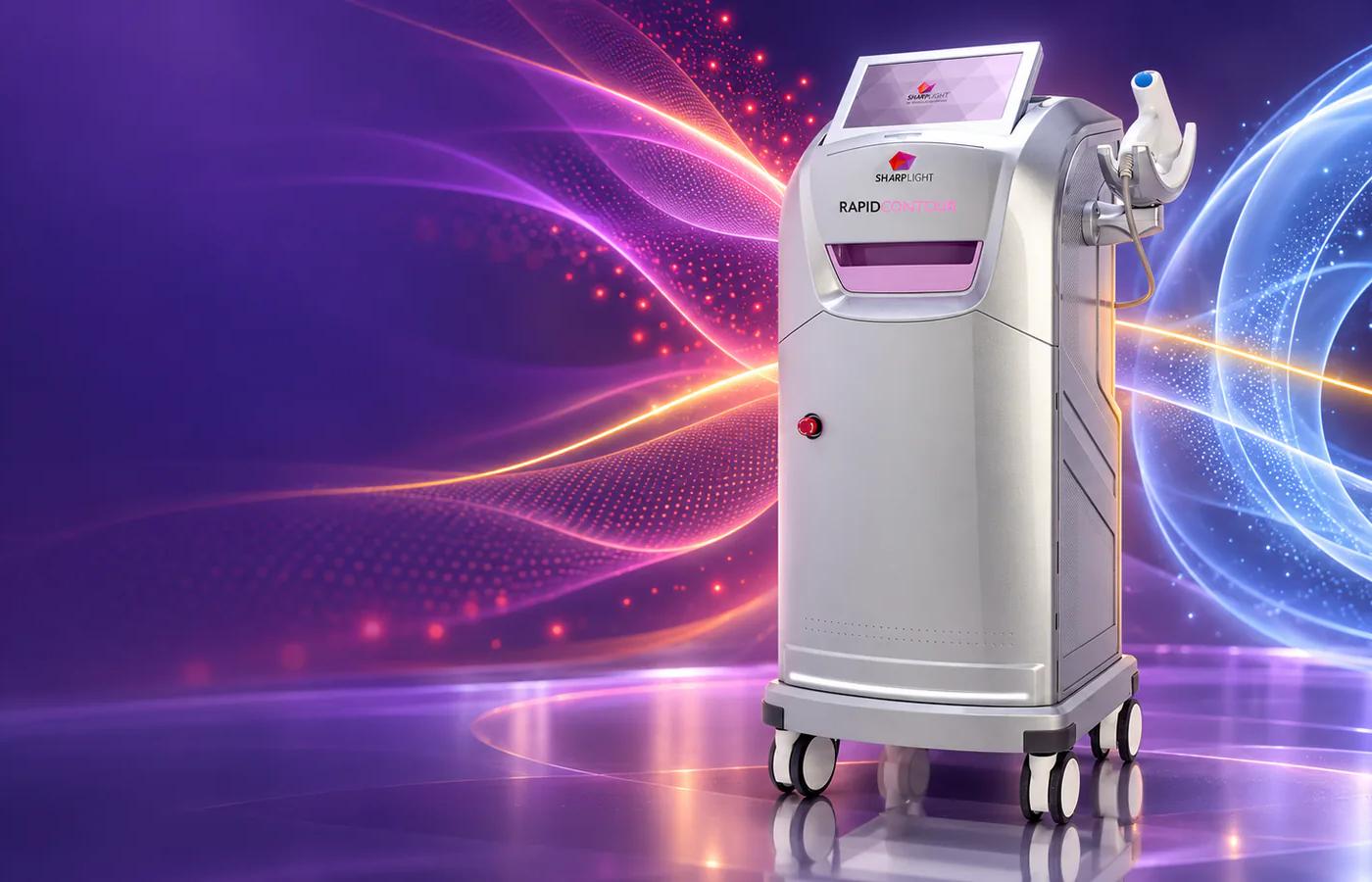
Pulse duration alone does not determine clinical fit. Compare the complete system, its documented indications and the support behind it. SharpLight’s Rapid QS is a dedicated Q-switched Nd:YAG platform with 1064 nm and 532 nm configurations. For a broader approach to comparing capital equipment, use our professional-device buyer’s guide as a decision framework rather than comparing headline specifications alone.
Questions to ask every equipment supplier
- Is the exact device and configuration licensed in Canada for the intended use?
- Which wavelengths, spot sizes and accessories are included in the quoted configuration?
- What operator training, clinical protocols and ongoing education are included?
- Who provides service in Canada, what response time is documented and what happens during downtime?
- Which consumables, maintenance visits, software fees or warranty extensions affect the ownership cost?
- Can the supplier provide installation requirements and references from comparable Canadian clinics?
Compare proposals on a common worksheet. A lower purchase price can become more expensive if the configuration excludes required accessories, training or responsive service. Conversely, a broader platform only improves the business case when the clinic has qualified operators and real demand for the additional indications.
Regulatory and training requirements in Canada
Federal requirements govern the sale and licensing of medical laser devices, while operator, facility and professional requirements can also depend on the province or territory, municipality, professional college and insurer. Health Canada advises clinics to confirm that the device is licensed for the intended procedure and recommends a licensed healthcare professional with specialized laser training for laser treatments other than hair reduction. See Health Canada’s cosmetic laser guidance and verify a device through the Medical Devices Active Licence Listing.
Before signing a lease or purchasing equipment, obtain written answers from the relevant regulator or professional college, municipality and insurer. Ask the supplier to document the intended use, training, installation requirements, maintenance plan and post-sale support. If a procedure may generate airborne contaminants, include an occupational-health assessment and appropriate controls in the facility plan.
Operational controls to plan before opening
- Operator qualifications and manufacturer training for the specific platform
- Controlled treatment area, wavelength-appropriate eye protection and warning signage
- Consultation, contraindication screening, consent and test-treatment protocols where appropriate
- Cleaning, infection-control, aftercare and incident-response procedures
- Maintenance records, service access and a process for reporting device problems
This article is a business-planning guide, not legal or regulatory advice. Requirements change, and the responsible authority must confirm what applies to the clinic’s location, practitioners and proposed services.
How to model revenue and break-even
Break-even is driven by utilization and contribution margin, not the advertised price of one session. Tattoo size, pigment, treatment complexity, local market and treatment plan can all affect pricing. Avoid building the model around the highest menu price or a full appointment book from opening day.
Use two simple calculations:
- Monthly contribution = completed sessions × realized average revenue per session − session-level variable costs.
- Estimated break-even period = total startup capital ÷ monthly cash contribution after fixed operating costs and financing.
Run at least three scenarios. The conservative case should include a slower lead ramp, incomplete treatment-plan acceptance, cancellations, seasonal variation and capacity that remains unfilled. The moderate case can reflect documented local demand. Treat an optimistic case as upside, not the basis for a financing decision.
Use the SharpLight ROI calculator to test your own price, session volume and cost assumptions. Save the model and update it with actual consultation and treatment data after launch.
Is tattoo removal a good business? An honest verdict
It can be a sound service line when the clinic has qualified operators, defensible local demand, adequate working capital and realistic expectations. It is not automatically profitable because tattoos usually require a treatment series. That creates repeat appointments, but it also extends the revenue cycle and makes follow-up, documentation and expectation-setting essential.
The model is stronger when the clinic:
- Validates demand before purchasing equipment
- Has an existing patient base or measurable referral channels
- Prices from contribution margin instead of copying a competitor
- Maintains conservative treatment expectations and clear aftercare
- Can support the platform through slower months without depending on best-case utilization
The model is weaker when the clinic:
- Purchases equipment first and searches for demand afterward
- Competes mainly by discounting
- Promises complete removal or a fixed number of sessions
- Underfunds training, marketing, maintenance or working capital
For many established aesthetic practices, adding tattoo removal can be a lower-capital test than opening a dedicated location because existing space, systems and patient relationships may be shared. Review SharpLight’s professional tattoo-removal treatment overview to understand the treatment category, then model the service with your own quotes and utilization assumptions.
Plan the clinic before choosing the machine
Start with the jurisdiction, patient demand and operating model. Then compare equipment that fits those requirements. A disciplined plan should still work under conservative utilization, cover the true cost of delivery and leave room for safe training, service and follow-up.
When the numbers are ready, book a device demo to review workflow, platform configuration, training and support with a SharpLight specialist.
FAQ
Frequently asked questions
How much does it cost to open a tattoo removal clinic in Canada?
There is no reliable Canada-wide total. The budget depends on the laser platform and configuration, financing, treatment-space requirements, insurance, training, launch expenses and working capital. Build the total from current written quotes and keep a reserve based on the clinic’s actual monthly fixed costs.
Do I need a medical licence to perform laser tattoo removal in Canada?
There is no single answer for every jurisdiction or operator. Health Canada advises using a device licensed for its intended procedure and recommends a licensed healthcare professional with specialized laser training for laser treatments other than hair reduction. Provincial or territorial rules, municipal requirements, professional scope and insurer conditions must also be checked before offering the service.
How profitable is a tattoo removal clinic?
Profitability depends on completed session volume, realized average revenue, variable treatment costs, fixed overhead, financing and client-acquisition cost. Model conservative, moderate and optimistic utilization, but make the investment decision from the conservative case. No machine or session price guarantees profitability.
Can I add tattoo removal to my existing clinic instead of opening a new one?
Yes. An existing clinic may be able to share space, staff, booking systems, marketing and an established patient base, which can reduce new overhead. The clinic must still verify equipment licensing, operator qualifications, facility and safety requirements, insurance coverage, training and realistic local demand.
Tattoo removal business planning
Run your own numbers before you invest
Model your session volume, realized pricing and costs to test a realistic payback timeline for your clinic.
Open the ROI Calculator